Category: unit 1

  • week 2

    Week 2 started with a trip to the library. Over the weekend, I had decided I was most interested in the rise of riso (lol, what a word creation). What causes the surge in popularity, even though riso prints were lower quality than what modern inkjet printers can do? Is it the yearning for analogue things in a highly digital age? Or are the imperfections of riso print that charming?

    Parts of my research included »The work of art in the age of mechanical reproduction« by Walter Benjamin (2008), as well as »The revenge of analog« by Sax (2016) and »The effort heuristic« by Kruger (2004). (More readings in the references).

    I took two things away from this research:

    1. Effort heurisitc

    seeing and/or experiencing the effort/process of a product changes how we perceive it’s value. More effort equals more value (Kruger, 2004).

    Does the process of riso printing change the value of a print for me personally?

    2. Walter Benjamin

    photography was the first time the hand was relieved of the principal responsibility which instead switched to the eye alone, allowing for a much faster process, that in turn has to take a loss in aura and genuineness.

    What happens if you reintroduce the hands in the process of riso printing photography?

    This informed the first version of my critical question:

    Critical Question:

    What causes the rise of risoprint? Is it the longing for the analogue medium in a digital age?

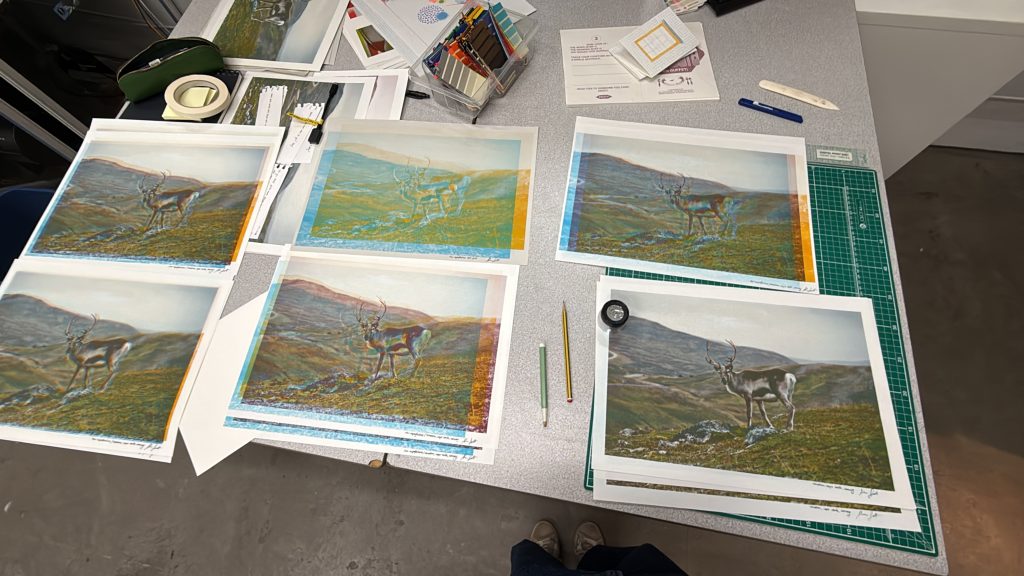
    So for my practice in iteration, I picked a photograph from one of our family holidays and decided to reintroduce »the hands« by producing riso prints of it.

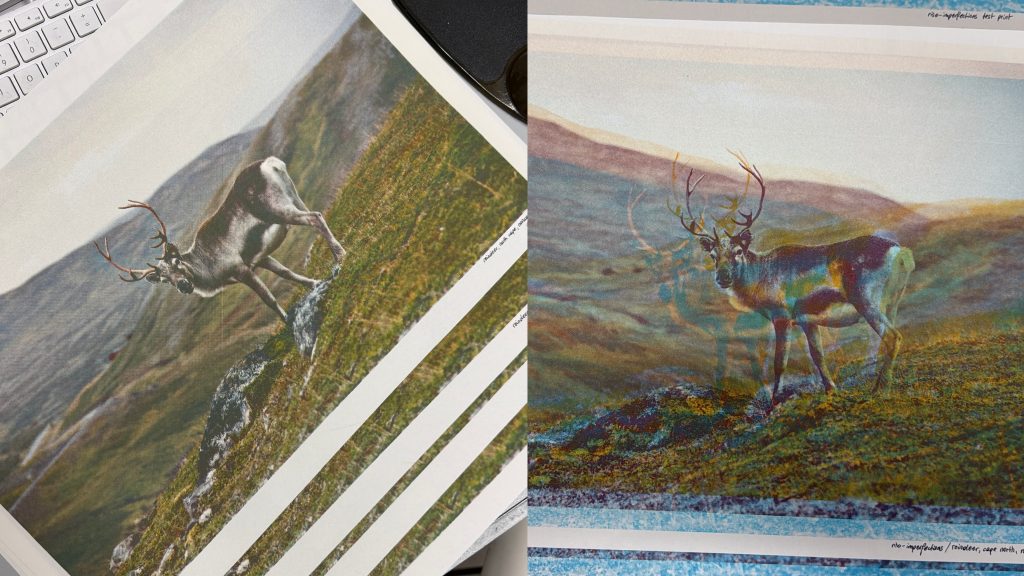
    While producing this riso print version, I also played with the settings and deliberately tried to enhance the imperfections of riso printing: moving the layers apart, instead of perfectly overlapping. This created interesting (albeit a little crazy) effects.
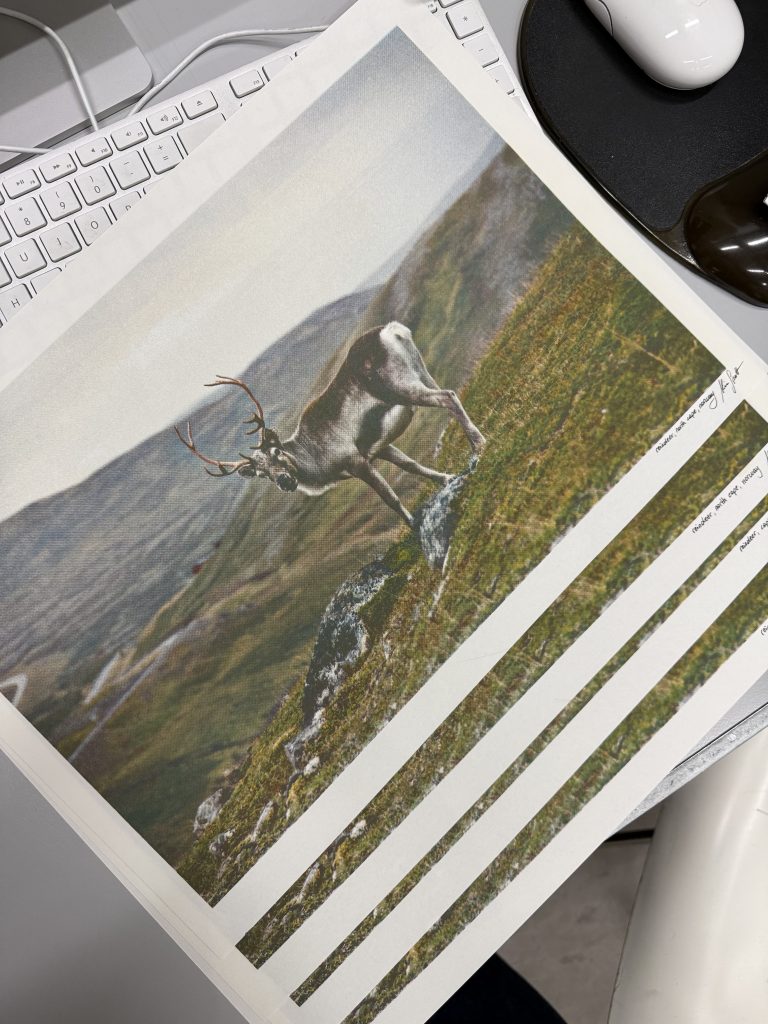
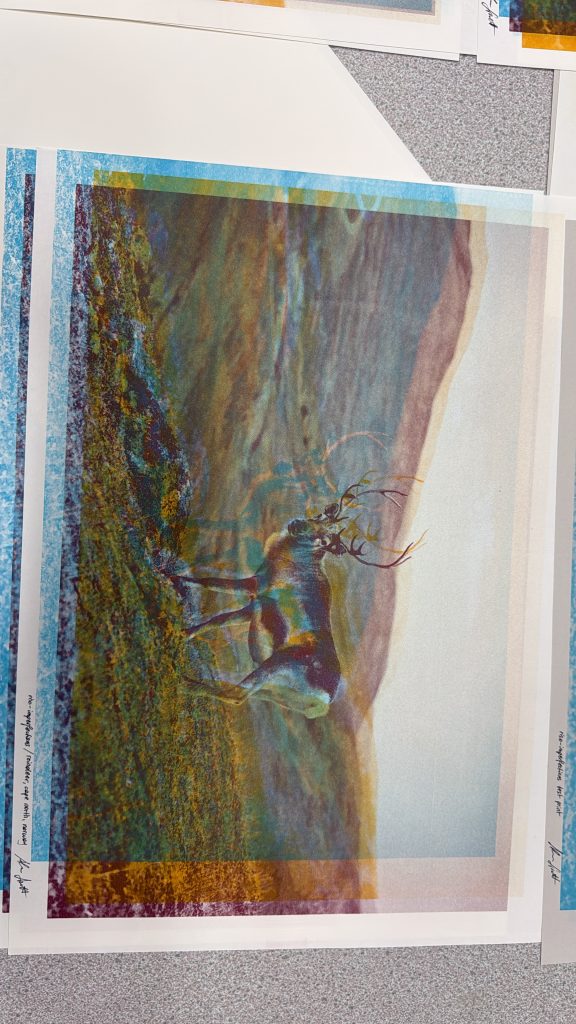
    I then taped different versions of my prints to spots around the universiyt along with 5 questions I asked people to answer. There was an inkjet print of the photograph, the perfect riso print, the trippy riso prints and a little collection of test prints saved throughout the process to visualise how long it took.

    The 5 questions were:

    Which print (inkjet or riso) has more value to you? Why?

    Which print holds more human value to you? Why?

    Do you think prints made through more human effort hold more value than prints »just printed by a modern printer«?

    This is a collection from the setup process for the riso prints. Seeing how much effort it took, does the riso print now hold more value for you?

    Look at these exaggerated imperfections. Do you think they add human value or take value away?

    I wish I had gotten more answers, but the ones I did get, were still useful. Especially one phrase: »Imperfections have always been a hallmark of humanity«.
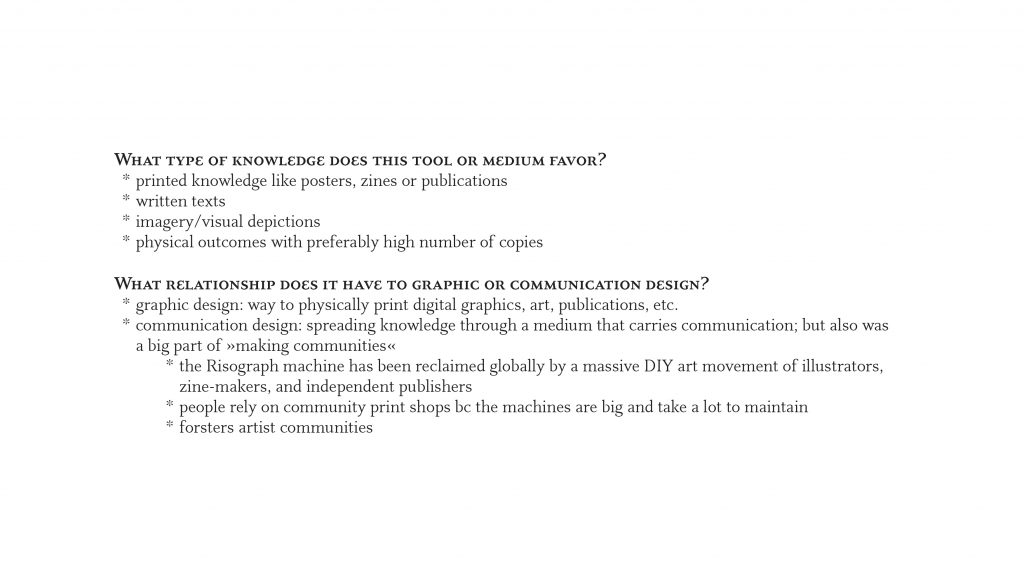
    So are we craving humanity? Human hallmarks? Human maker marks? Do we reach for the never-drying riso, the streaky riso, the slightly dull riso, the slightly off riso because it connects to us being human? Can we feel that someone touched it, handled it?

    This prompted me to rephrase my critical question:

    Critical Question 2.0:

    Can the imperfections of risograph be reframed as fingerprints of a human-driven process in a highly digital world? And is this blatant visibility of imperfection as the human hallmark what causes the rise of risoprint and trends of cultivating handcraft-driven lifestyles?

    At the end of week 2 I wanted to further explore these imperfections that I had labelled as »human fingerprints«. I wanted to iterate on them and find a way to bring more focus towards them. The feedback also directed me that way, asking how »realness vs. digital appreciation« could be shown, »how to upscale the imperfections«.
  • week 1

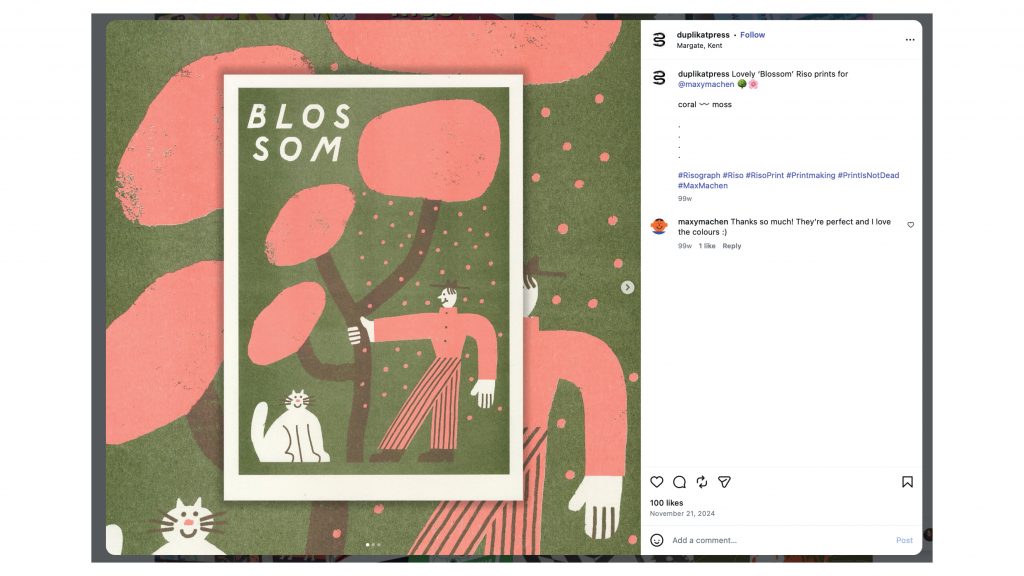
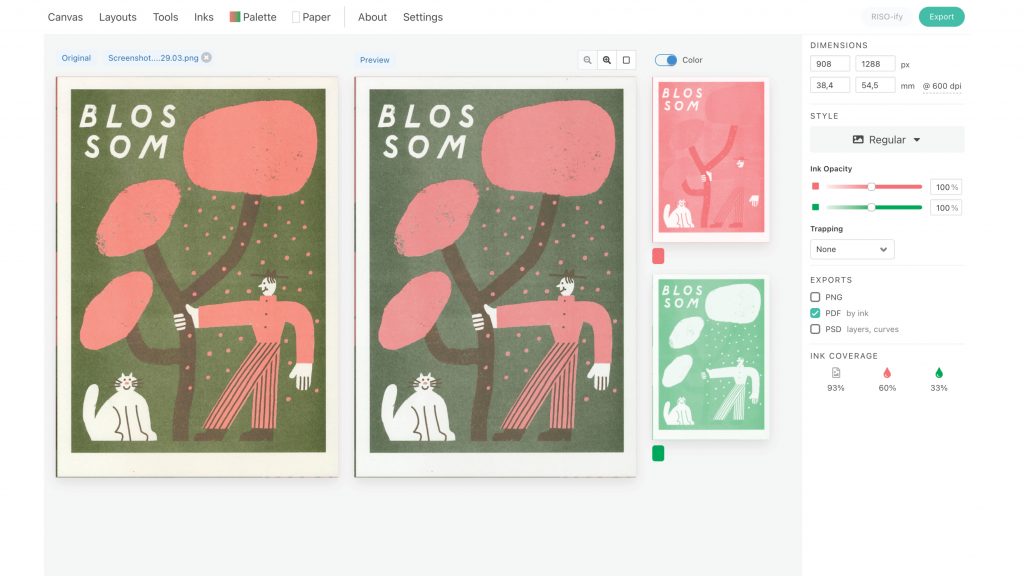
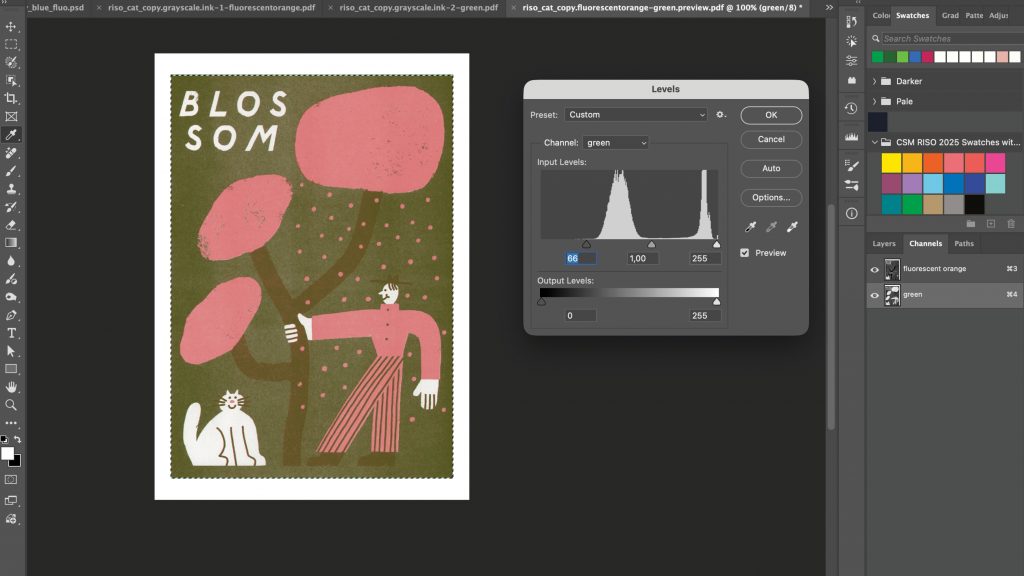
    For the first week we had to copy an existing artwork using our chosen technique. I chose »Blossom« by Max Machen and duplikatpress.

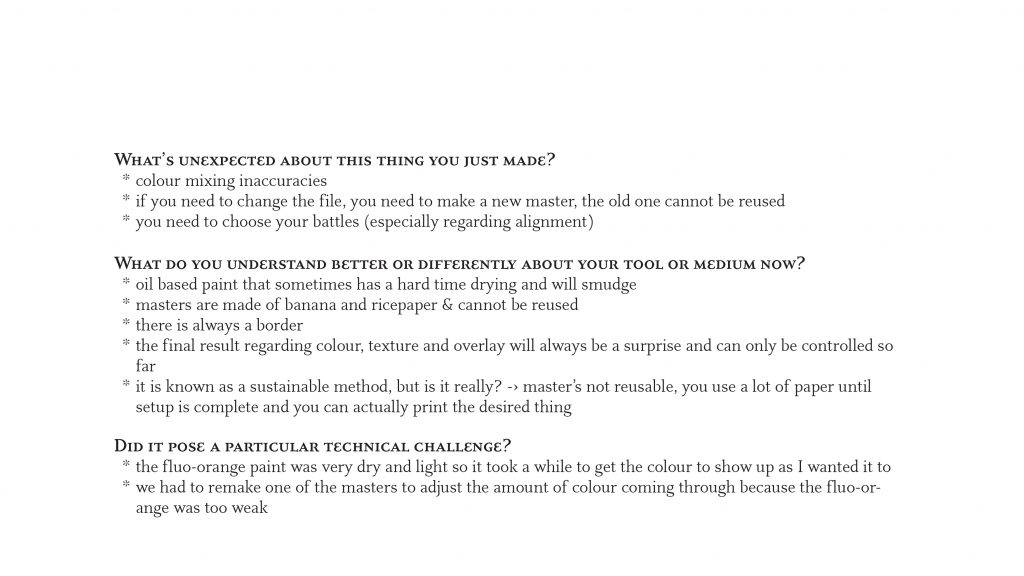
    Through copying I learnt how to separate the layers, individually tweak them and get them ready for print. I also quickly realised that it takes many test prints to line the layers up correctly and get a final print. In short: a lot of labour goes into riso printing.

    As I had extra time during my riso slot, I also printed a calligraphy piece of mine. Without intending to, the unevenness of the inks caused an interesting colour effect, highlighting these »faults« instead of concealing them. I found this very interesting and kept it in mind while forming my critical questions.

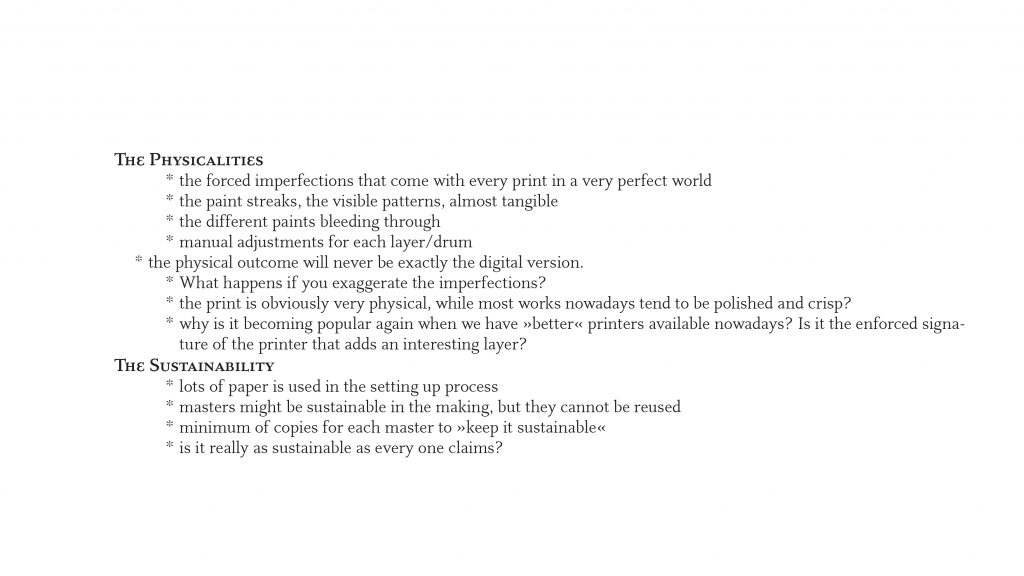
    I had no definite critical question at the end of week 1, but two main interests that I wanted to explore further: the physicalities and the sustainability of riso print. This, as well as some feedback from the tutorial such as »how do people judge different visual versions of it?« »what can I do and what can’t I do?« and »can I replicate the inaccuracies of the calligraphy print?« informed my work during the second week.

  • week 3

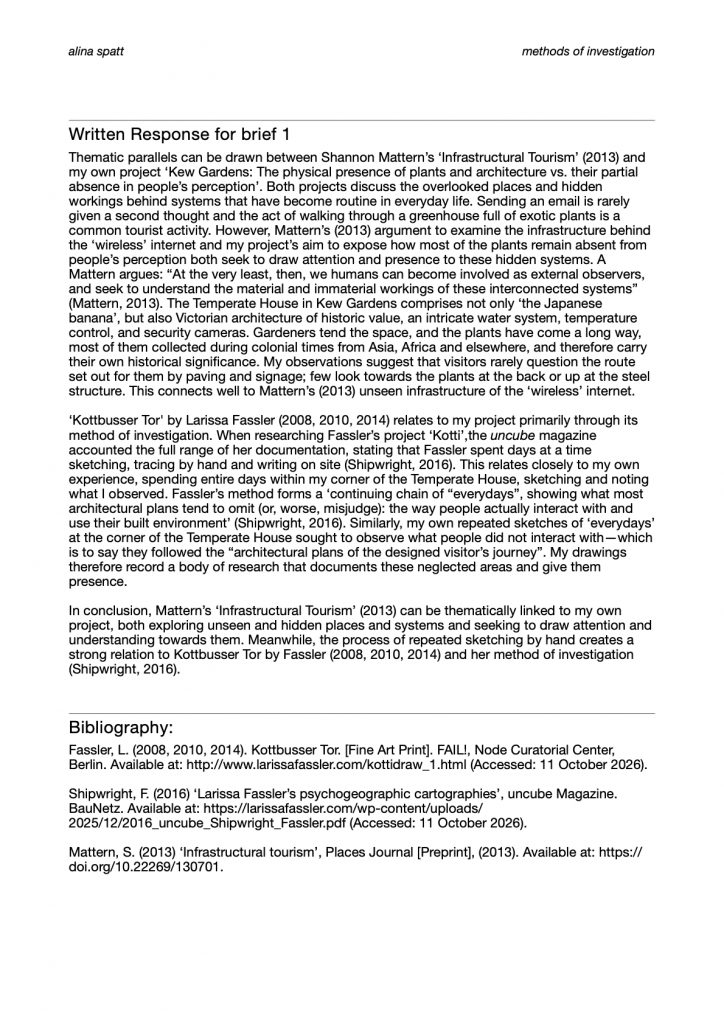
    In week 2 I had begun to discover the topic of absence vs. presence. I had looked for absent parts and forced them into presence by sketching them in macro detail. For week 3 I wanted to deepen my investigation into sketching absence vs. presence and how this could look like.

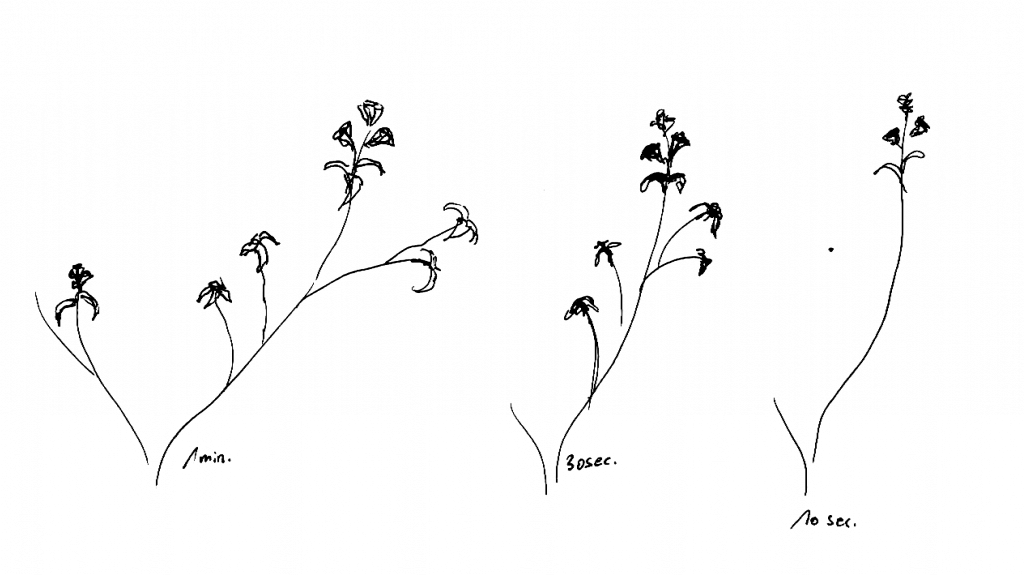
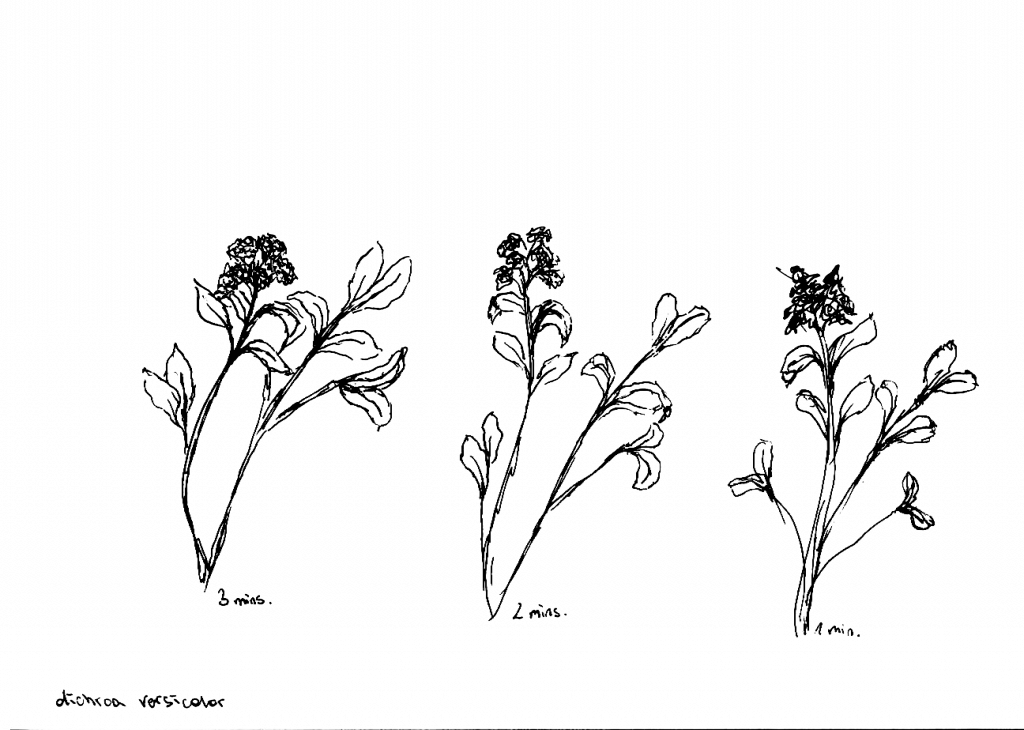
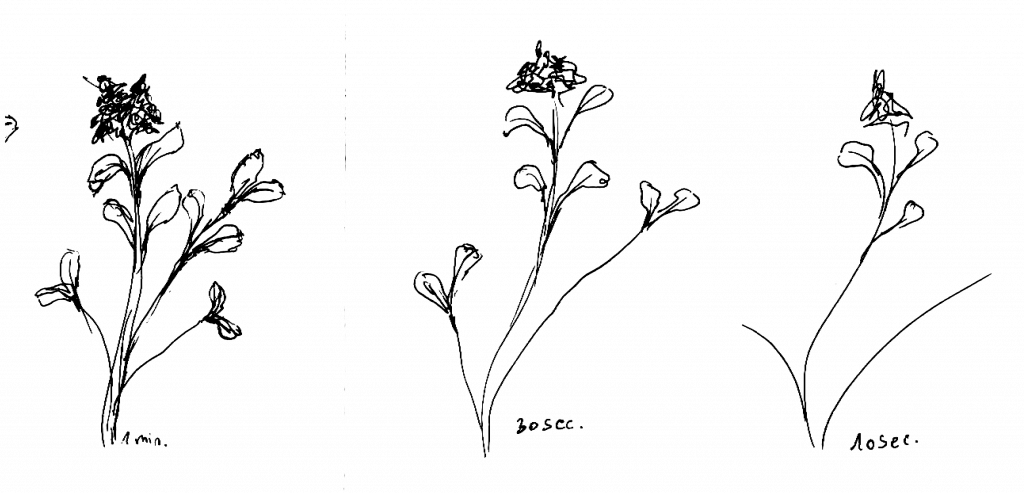
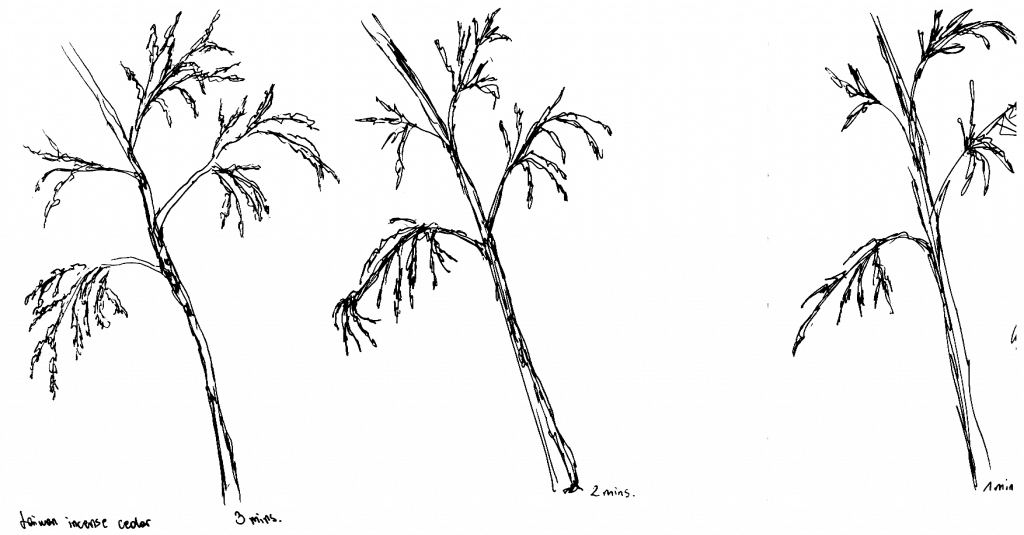
    timed sketching

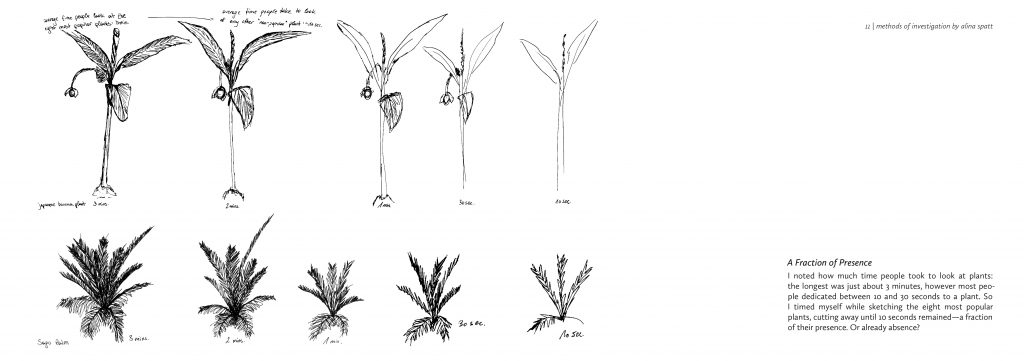
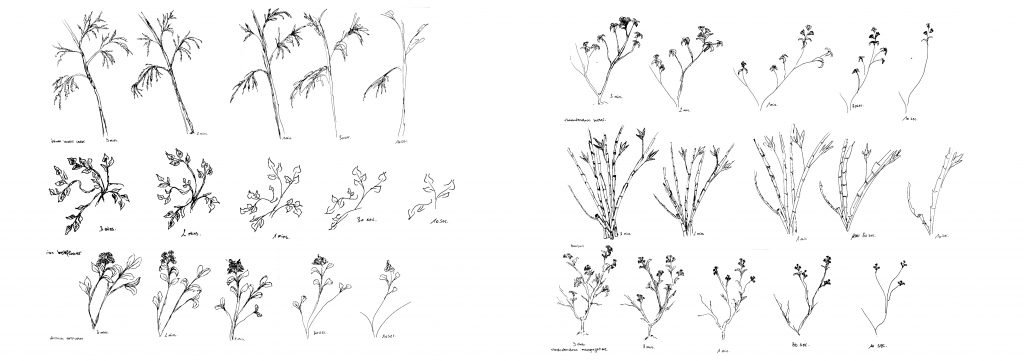
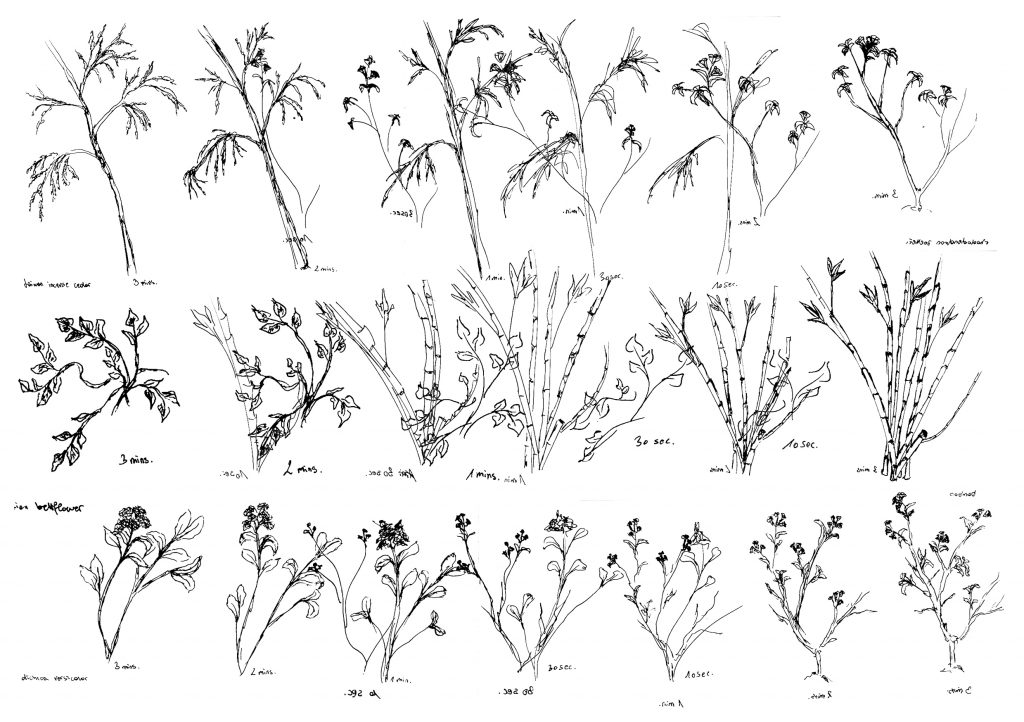
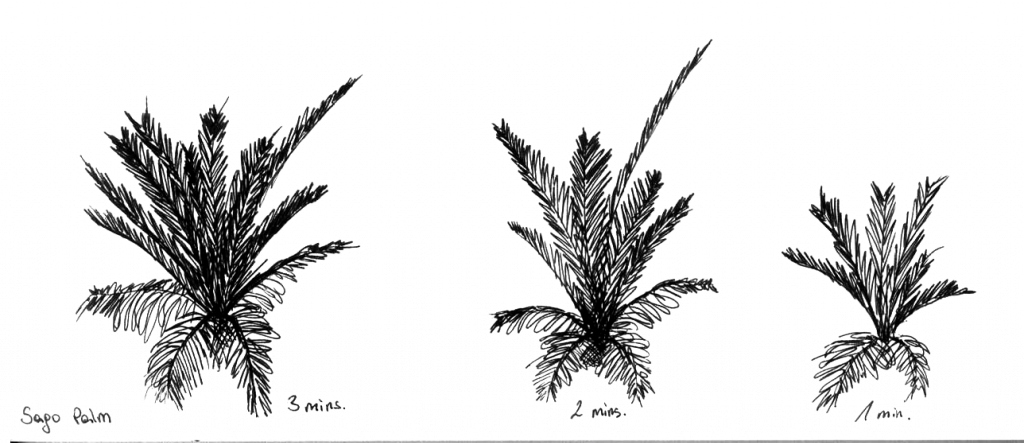
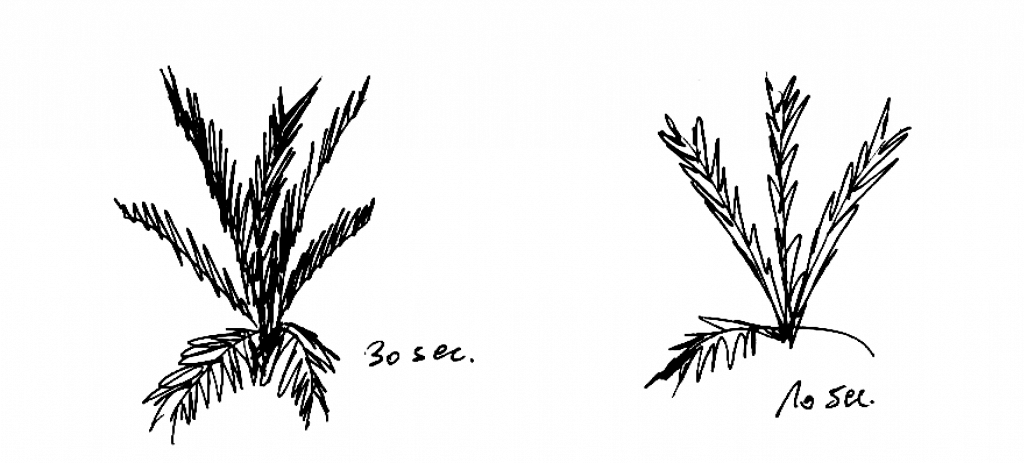
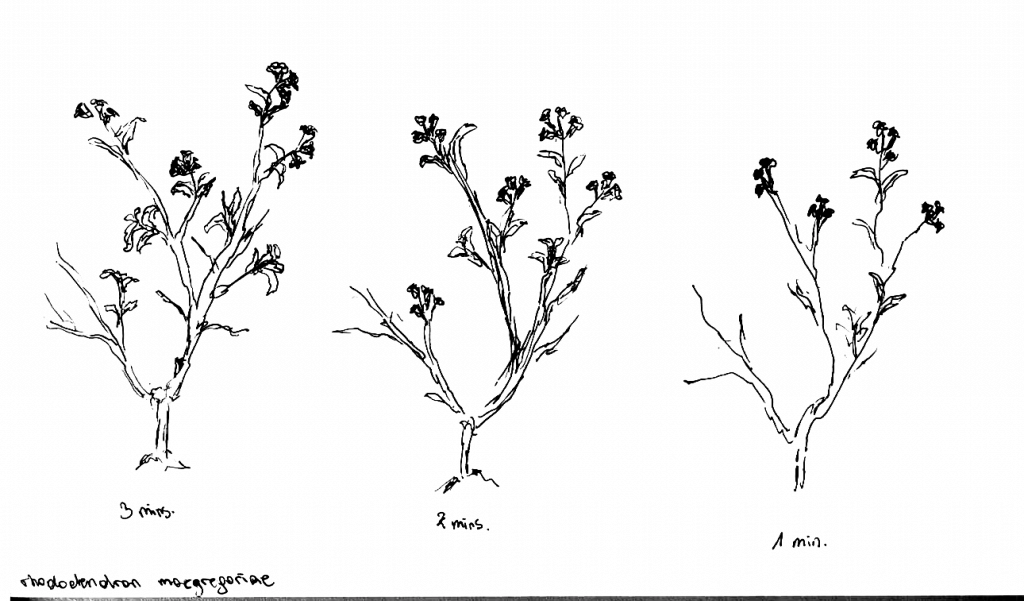
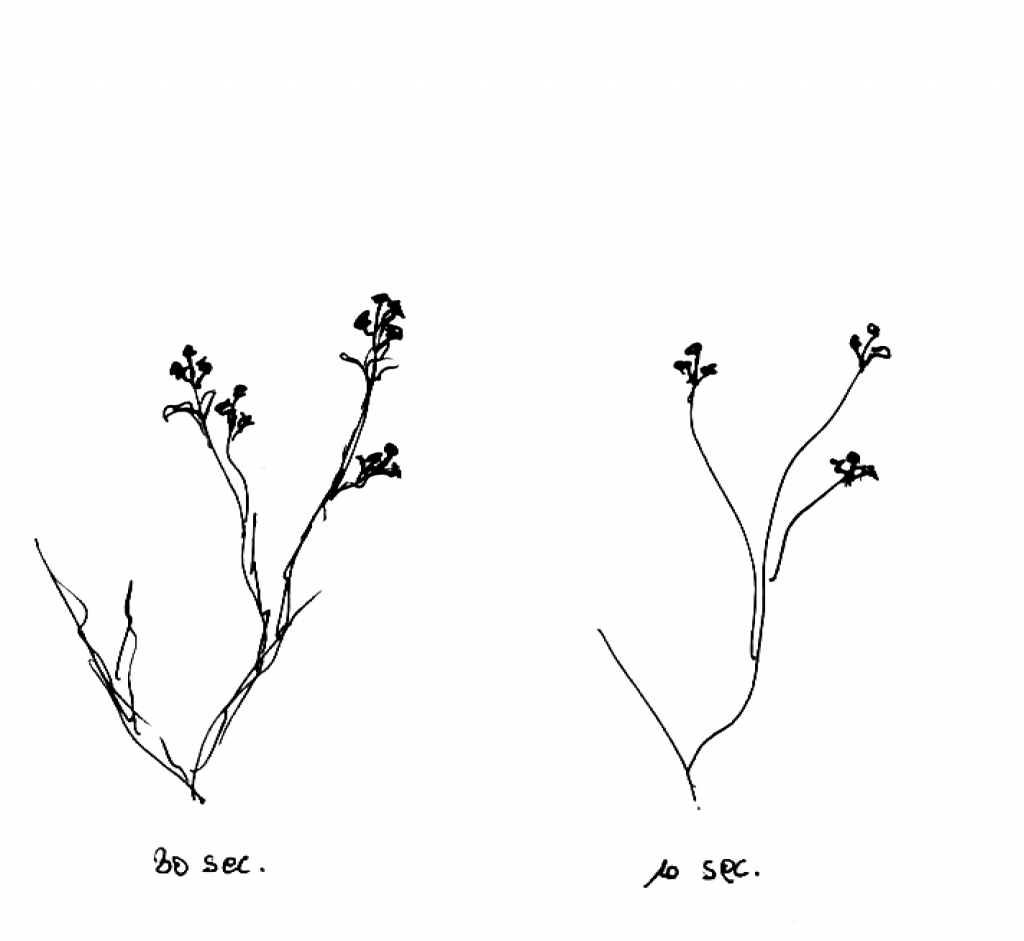
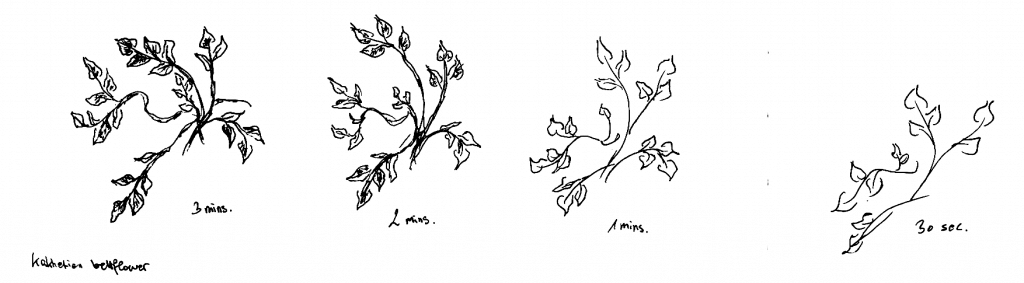
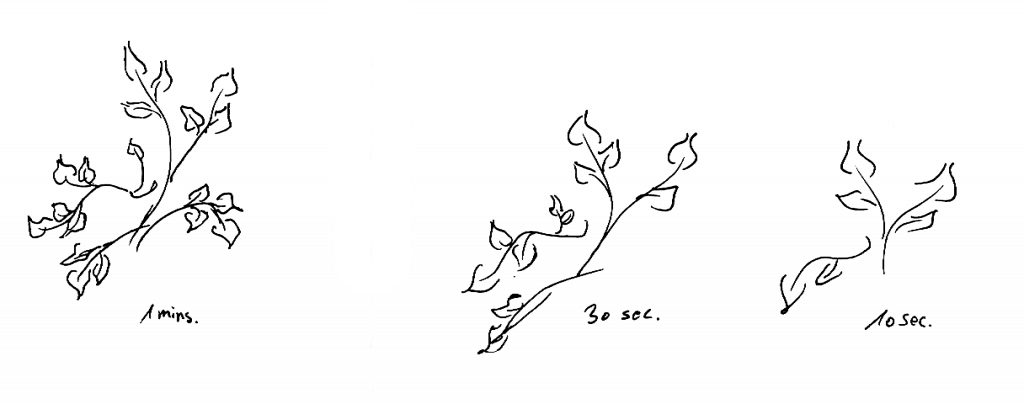
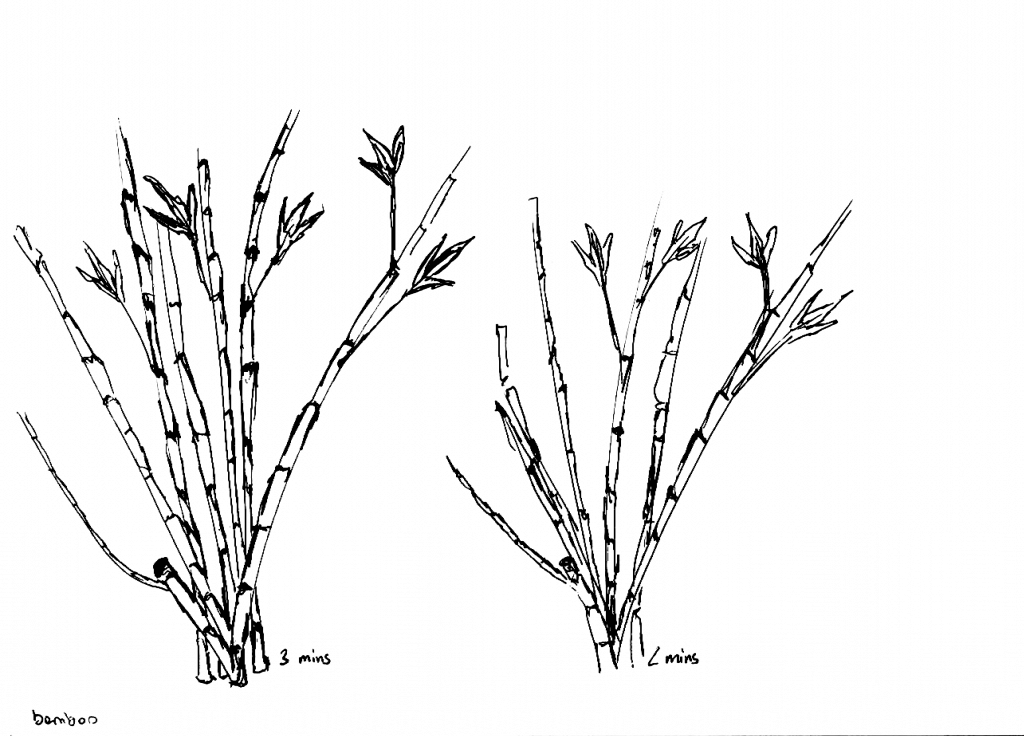
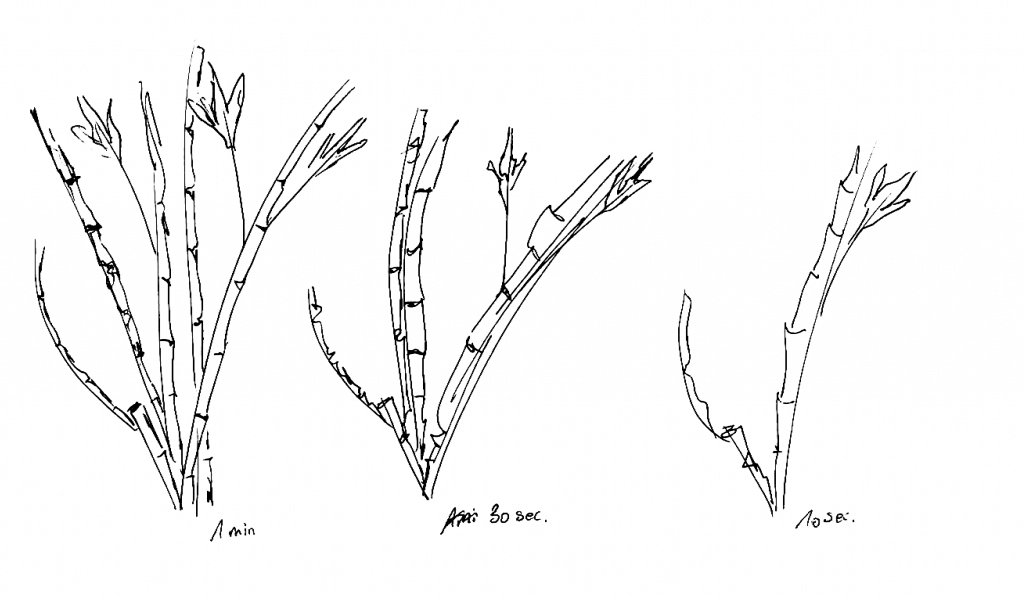
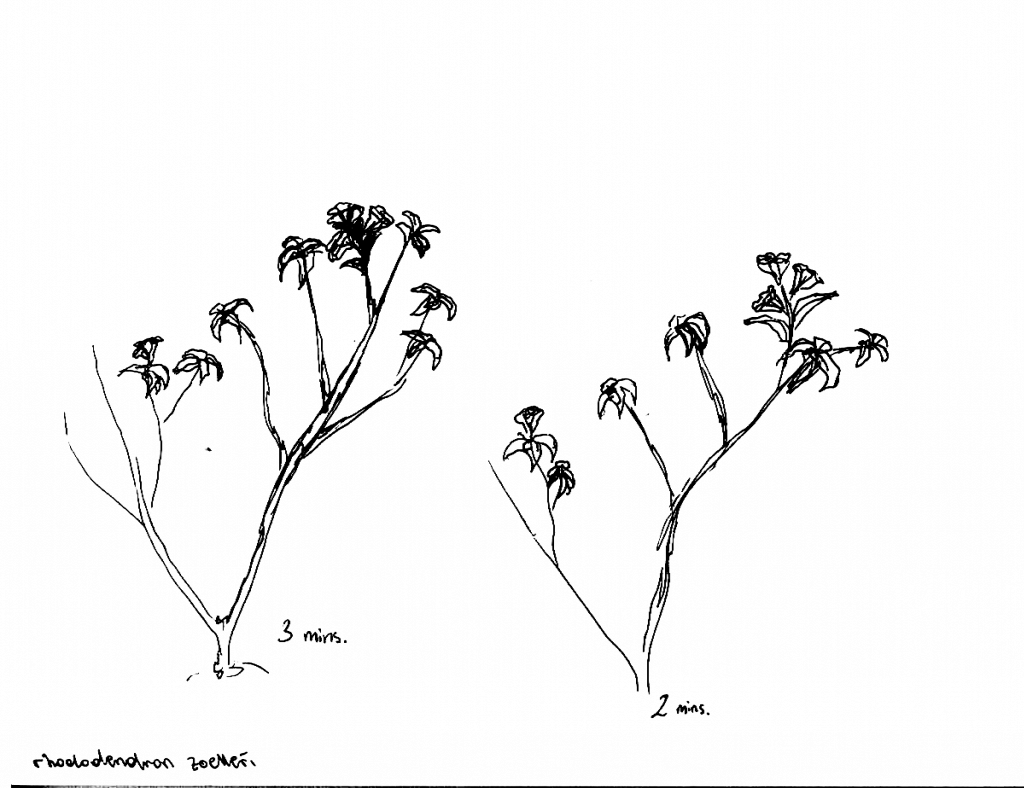
    I sat back down and noted the time people took to look at plants. The longest was just about 3 minutes, but most plants received about 10-30 seconds of attention. I wondered how much presence could be recorded within these different time spans. When does presence turn into absence?

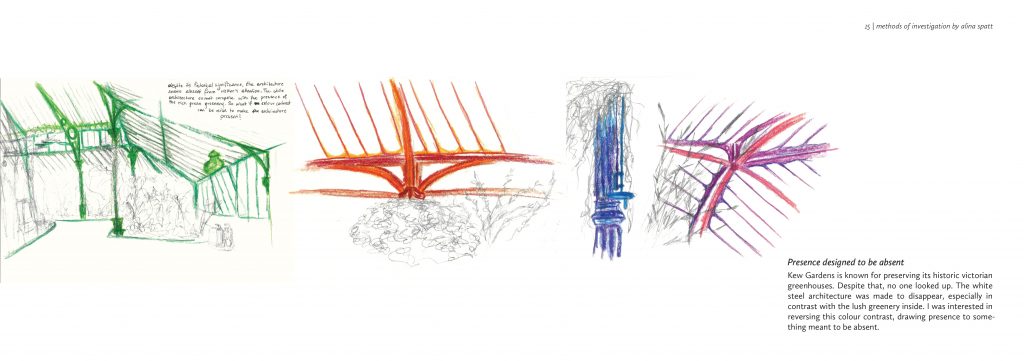
    architecture designed to be absent?

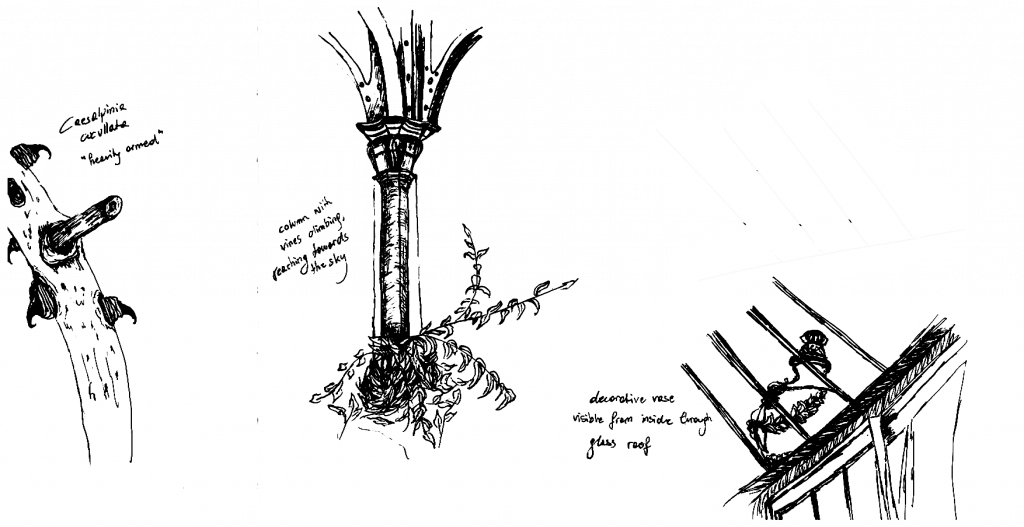
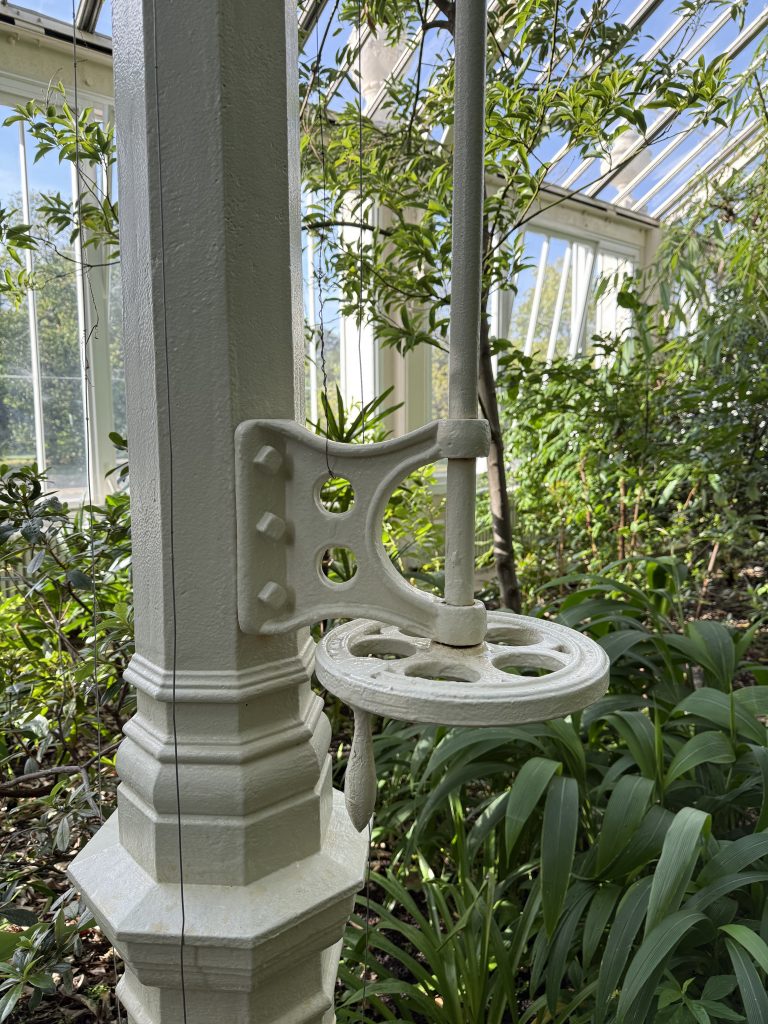
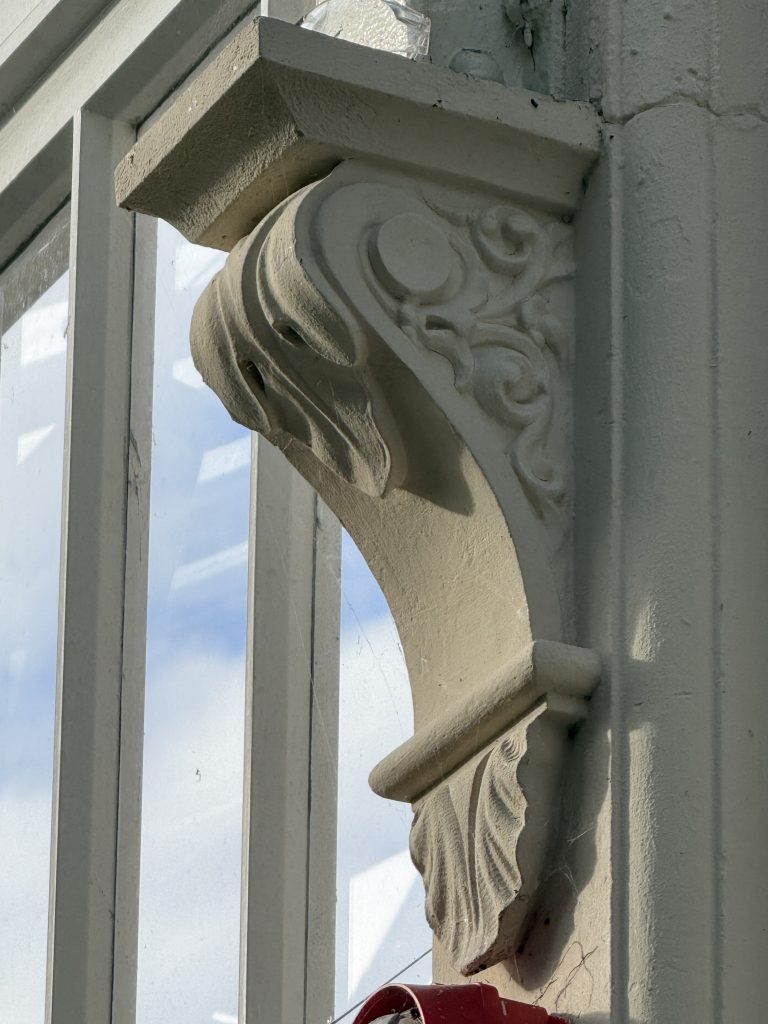
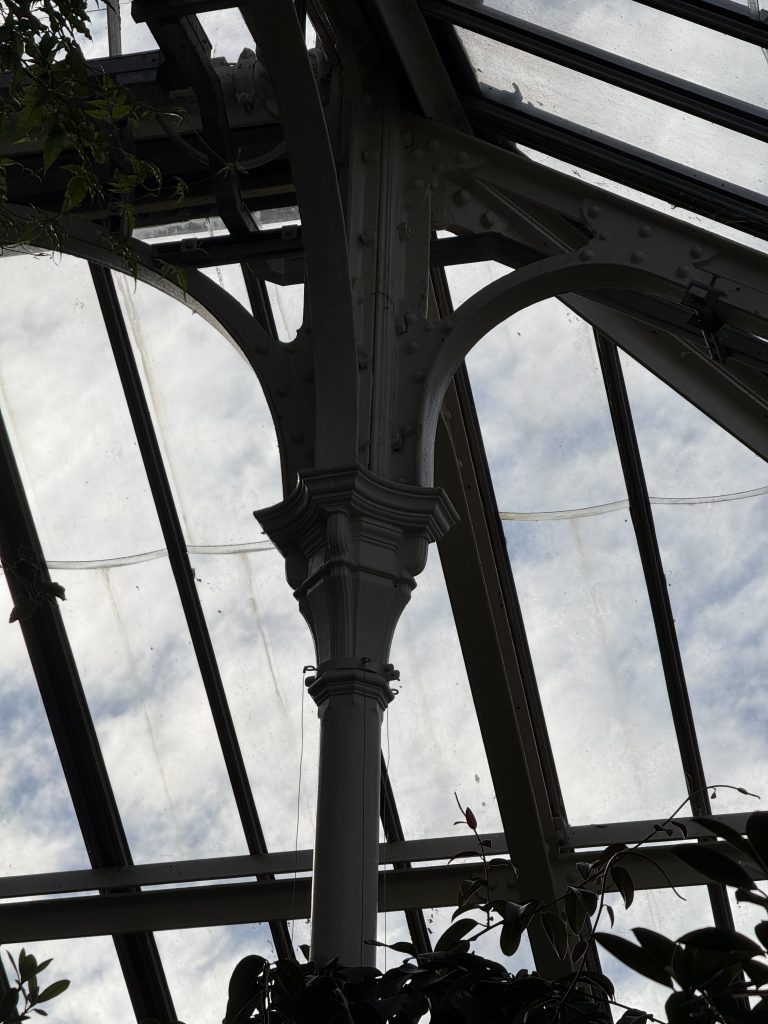
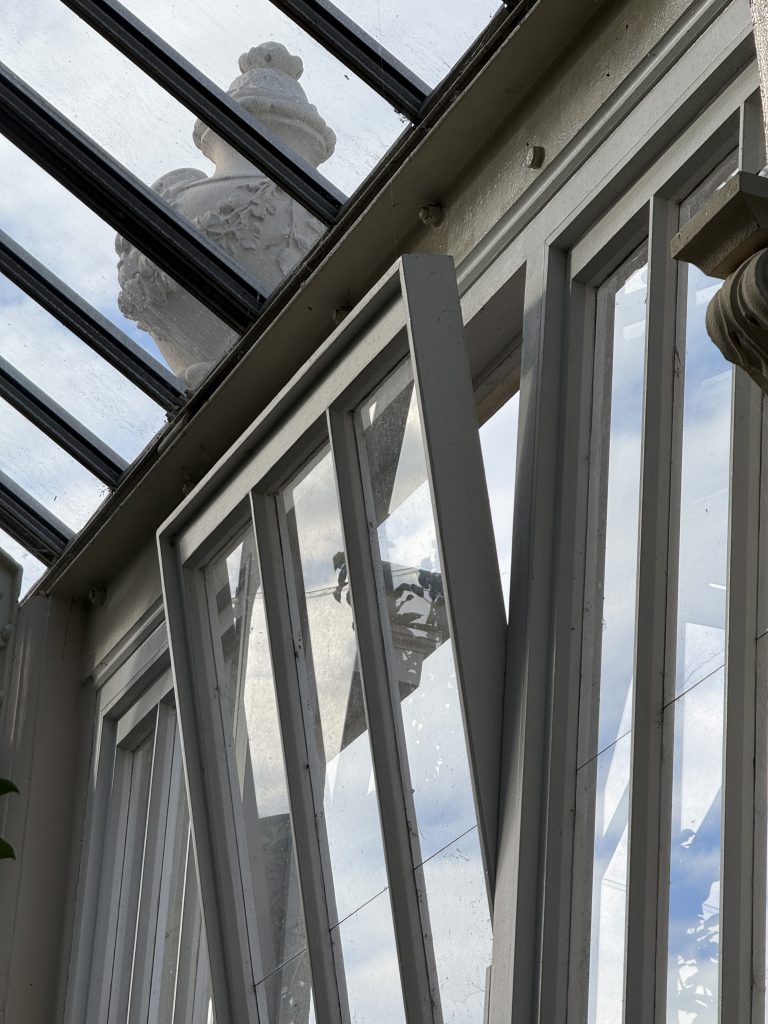
    When I discovered that no one looked up at the architecture, even though Kew Gardens is known for its historic victorian greenhouses, I discovered that colour contrast can be a way to make something intentionally absent. The white architecture blended perfectly into the background, the focus being drawn towards the lush greenery inside. I decided to play around with that and reverse it.

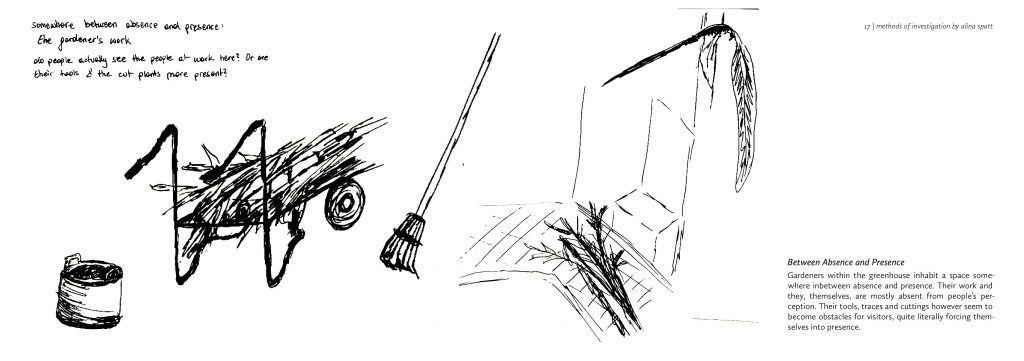
    inbetween absence and presence: the gardeners

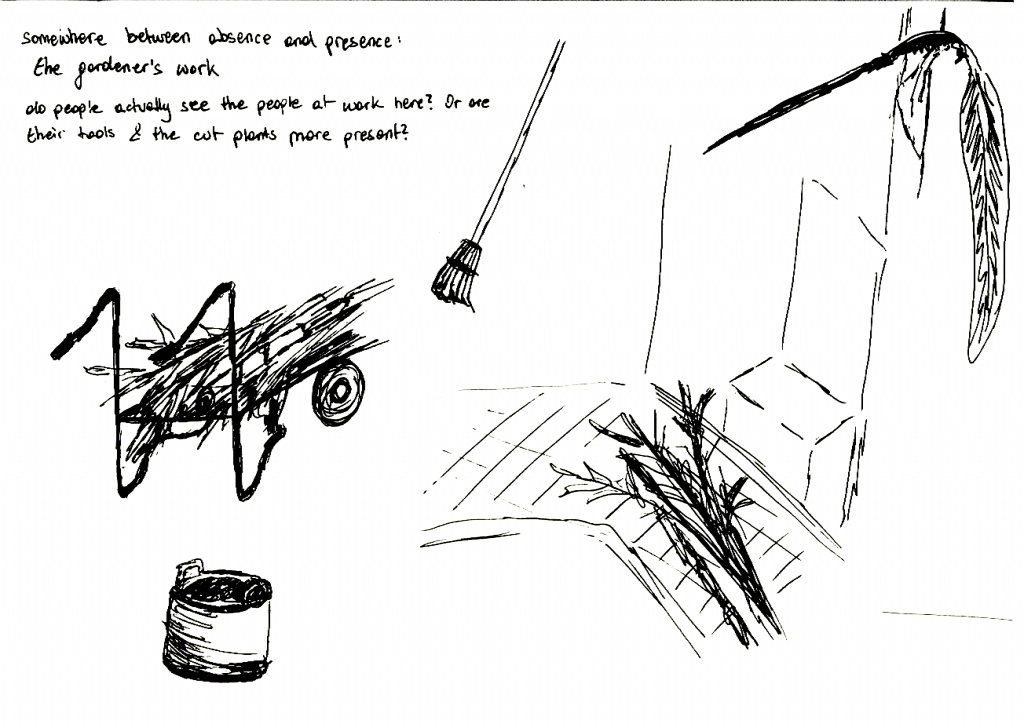
    I noticed that the gardeners working in the greenhouse are usually absent from people’s perceptions. The are not spoken to, not looked at. But their tools force themselves into people’s perception, they become obstacles. The traces and cuttings spread on the floor, the wheelbarrow blocking the way, the bucket narrowing the walkway. This seemed to be an interesting space somewhere between absence and presence.

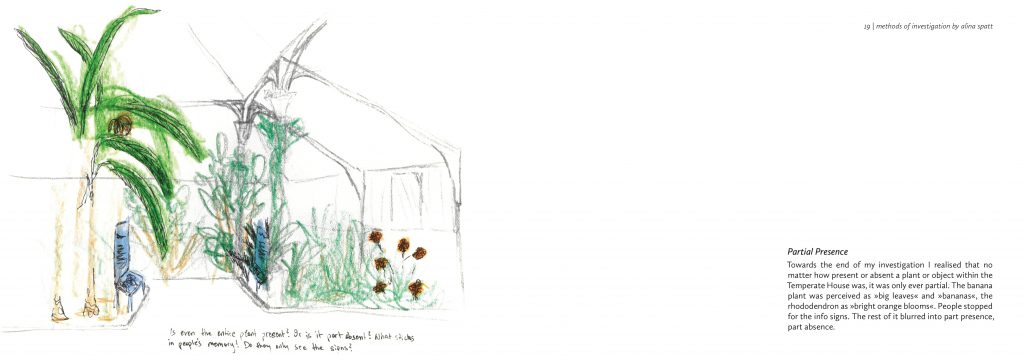
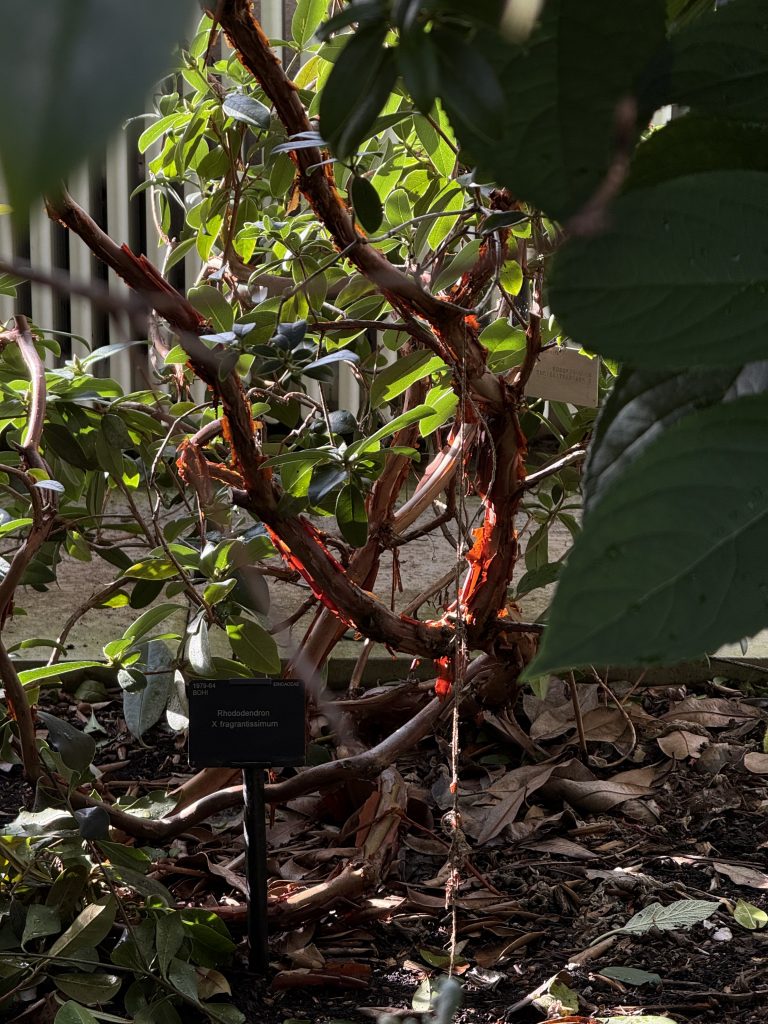
    Towards the end of my investigation I realised that no matter how present or absent a plant or object within the Temperate House was, it was only ever partial. The banana plant was perceived as »big leaves« and »bananas«, the rhododendron as »bright orange blooms«. People stopped for the info signs. The rest of it blurred into part presence, part absence.
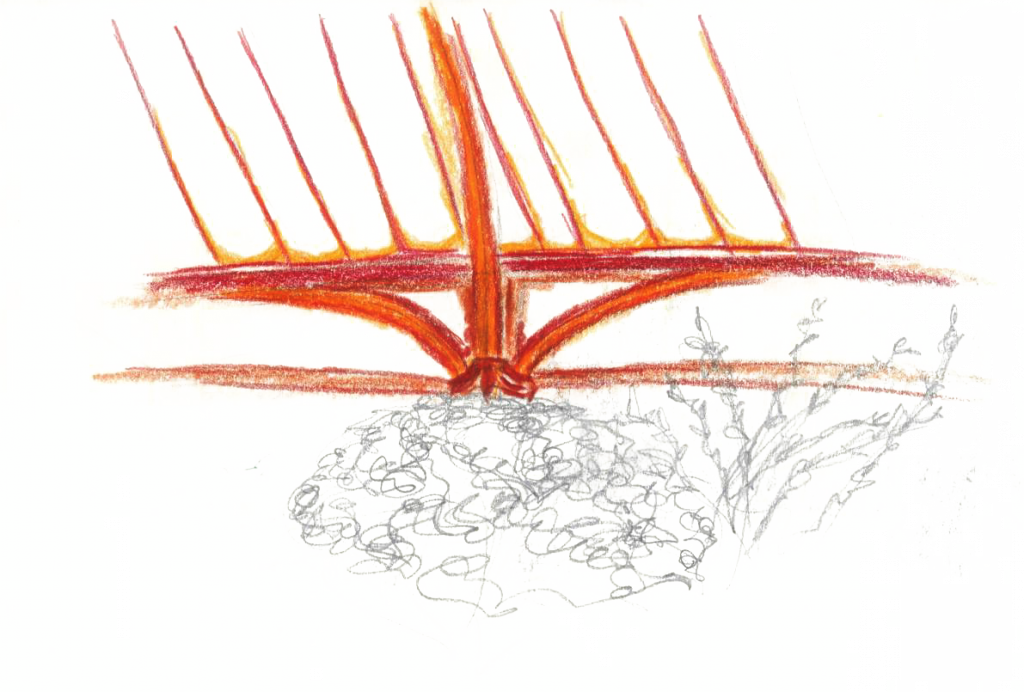
    can we even record full absence?

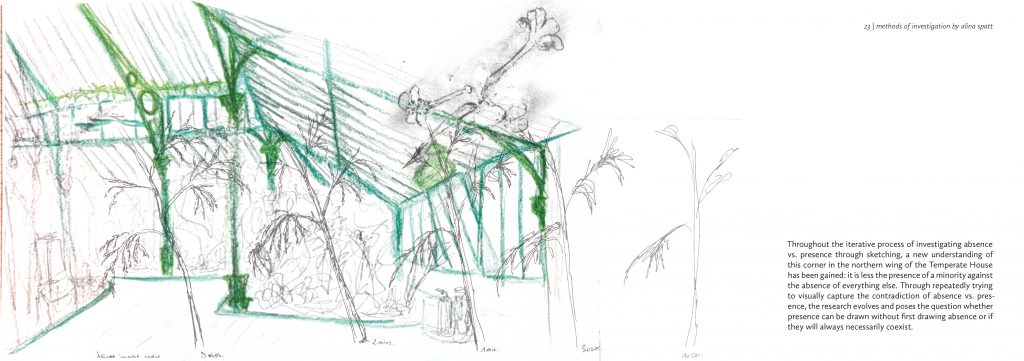
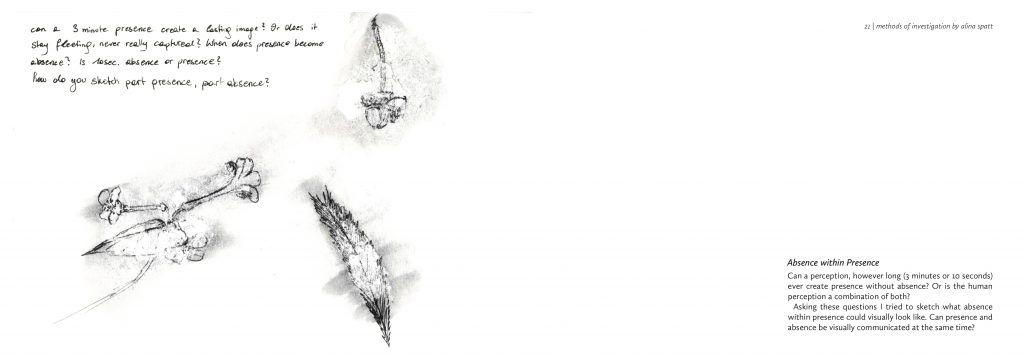
    Can a perception, however long (3 minutes or 10 seconds) ever create presence without absence? Or is the human perception a combination of both?

    Asking these questions I tried to sketch what absence within presence could visually look like. Can presence and absence be visually communicated at the same time?

  • week 2

    In week 2 I decided to continue with sketching as my method of investigation. I went back to Kew Gardens to and tried to change my perspective. In week 1 I focused on what I, myself, could see. This week, I wanted to switch to the perspective of others.

    Can my perception change, if I try to see what others see?

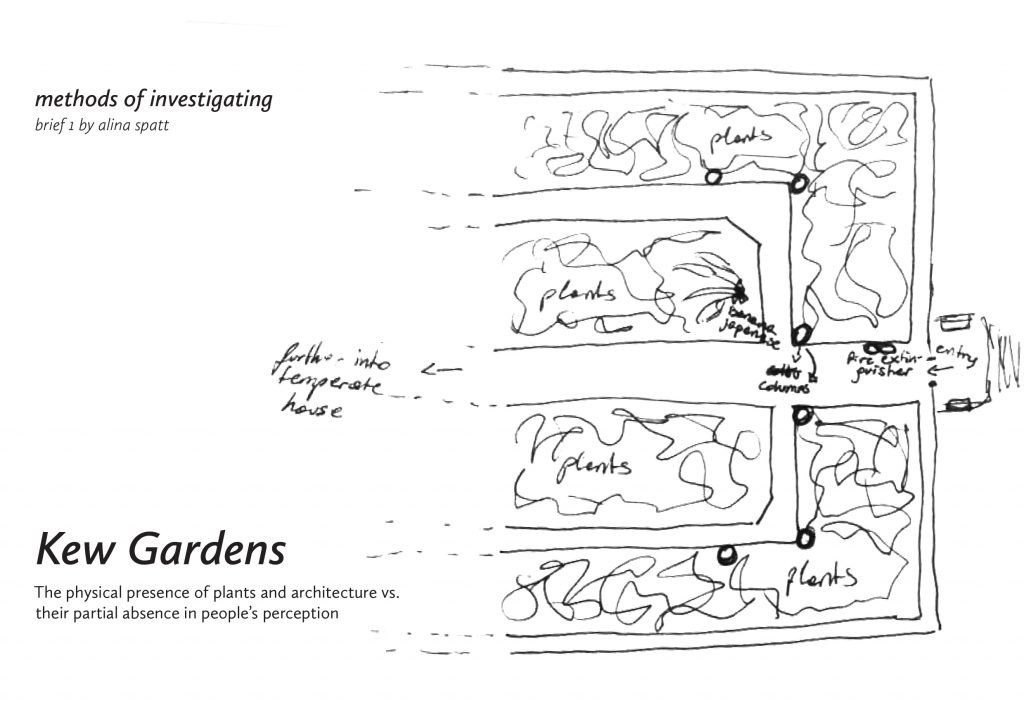
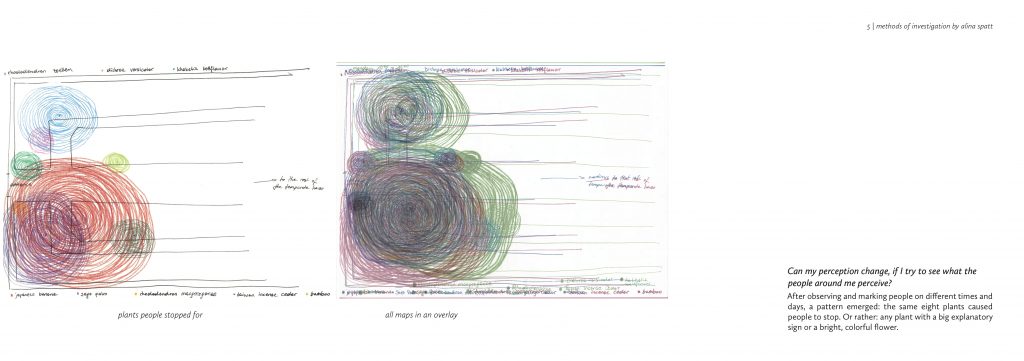
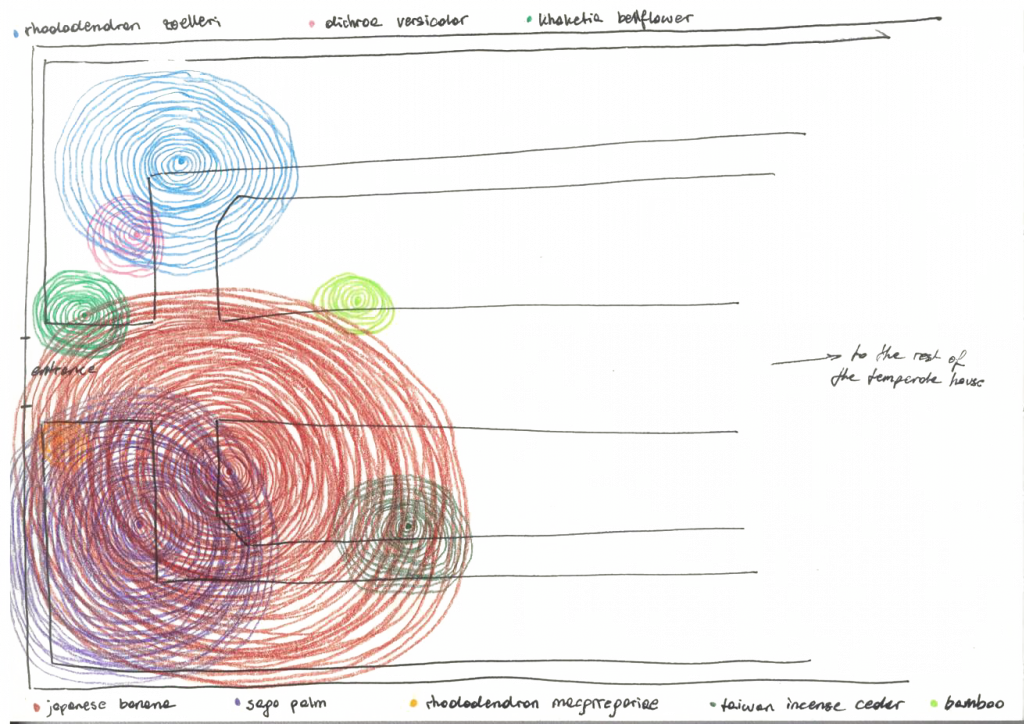
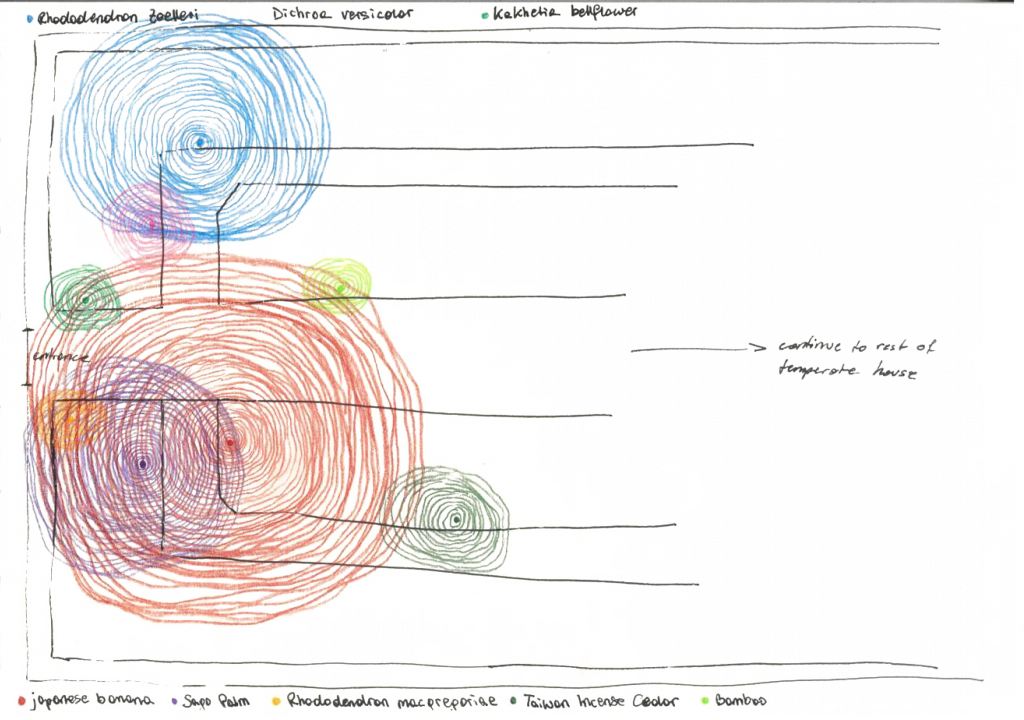
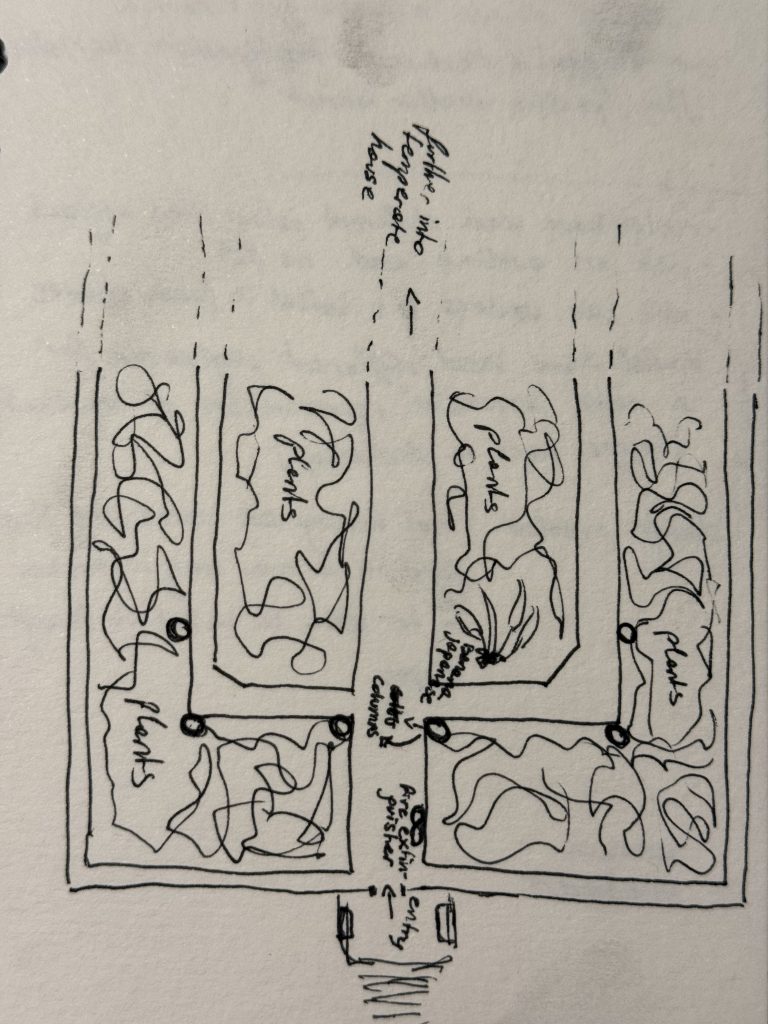
    I sat down and mapped other people’s perception: every plant they stopped at was marked by a dot on the map, whenever another person would stop at it, a circle was added. Multiple maps during different times of the day showed a certain pattern of eight favourite plants.

    Absence vs. Presence

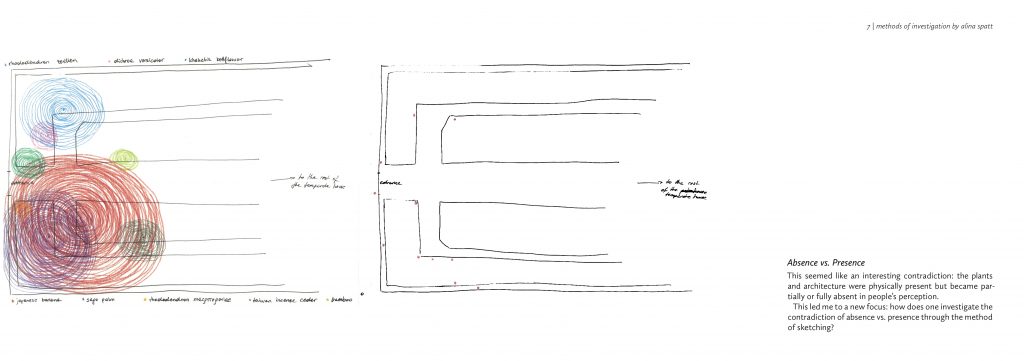
    The emerging pattern of people’s perceptions provided an interesting contradiction to me: the plants and the architecture were physically present, but partially or fully absent through people’s perception. Besides the eight favourite plants, nothing was truly looked at or stopped for.

    How does one investigate absence vs. presence through sketching? This became my refined focus.

    Making absence present

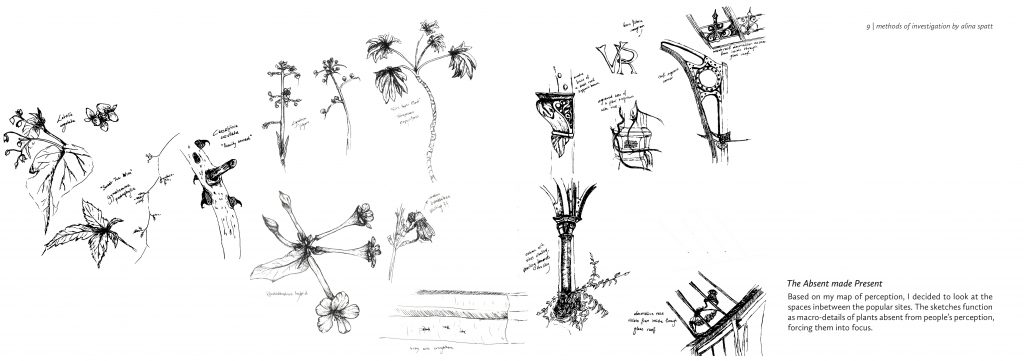
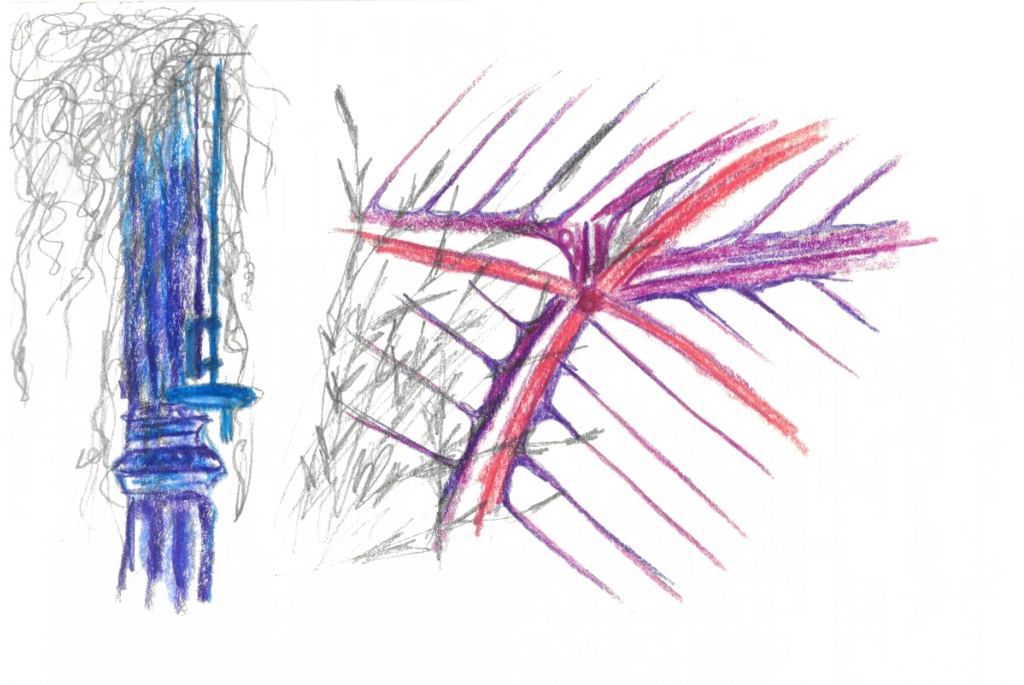
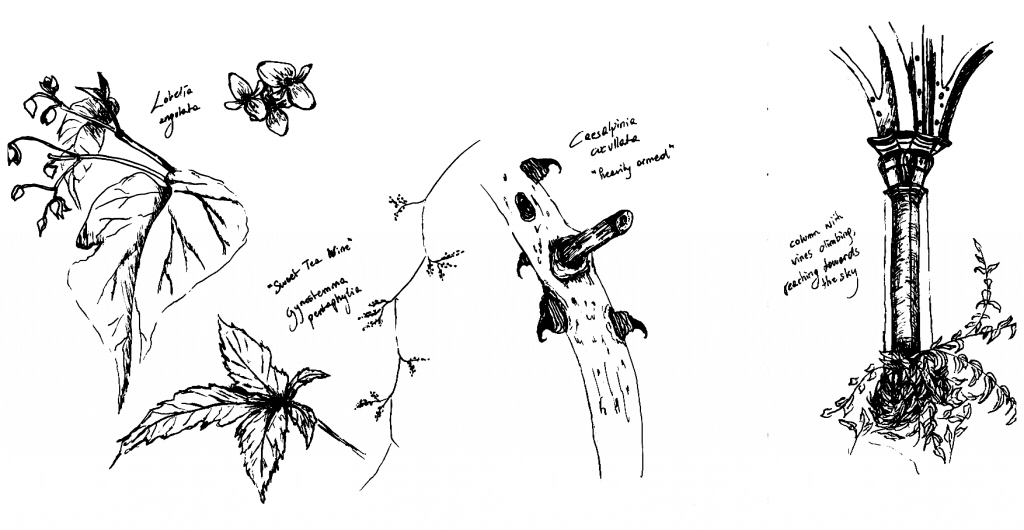
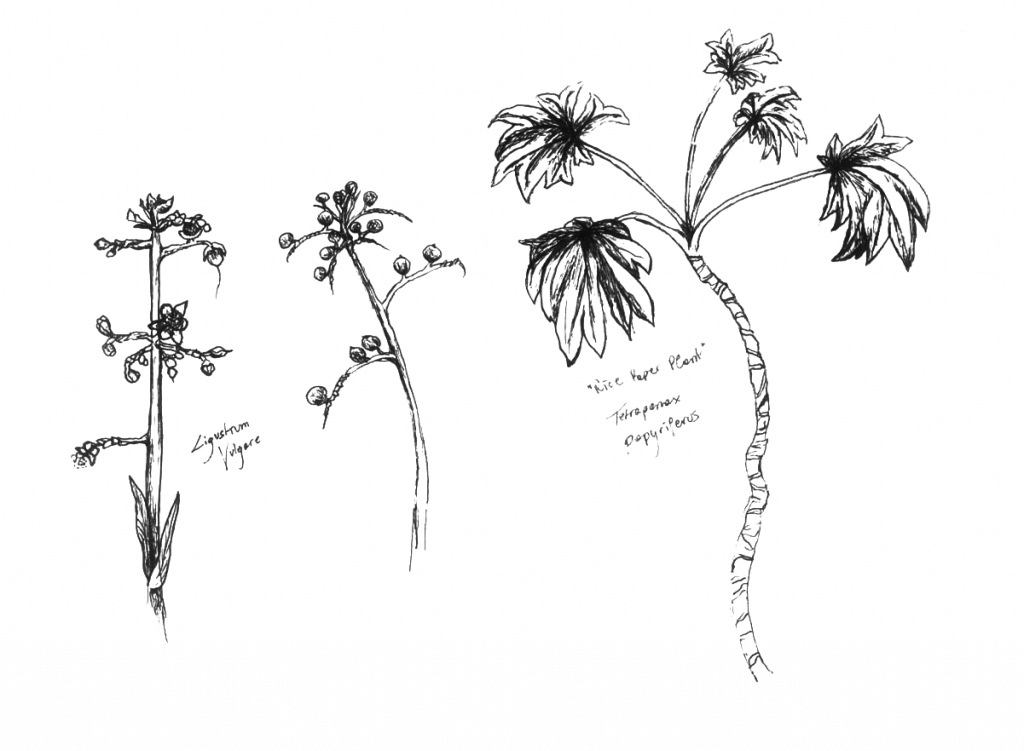
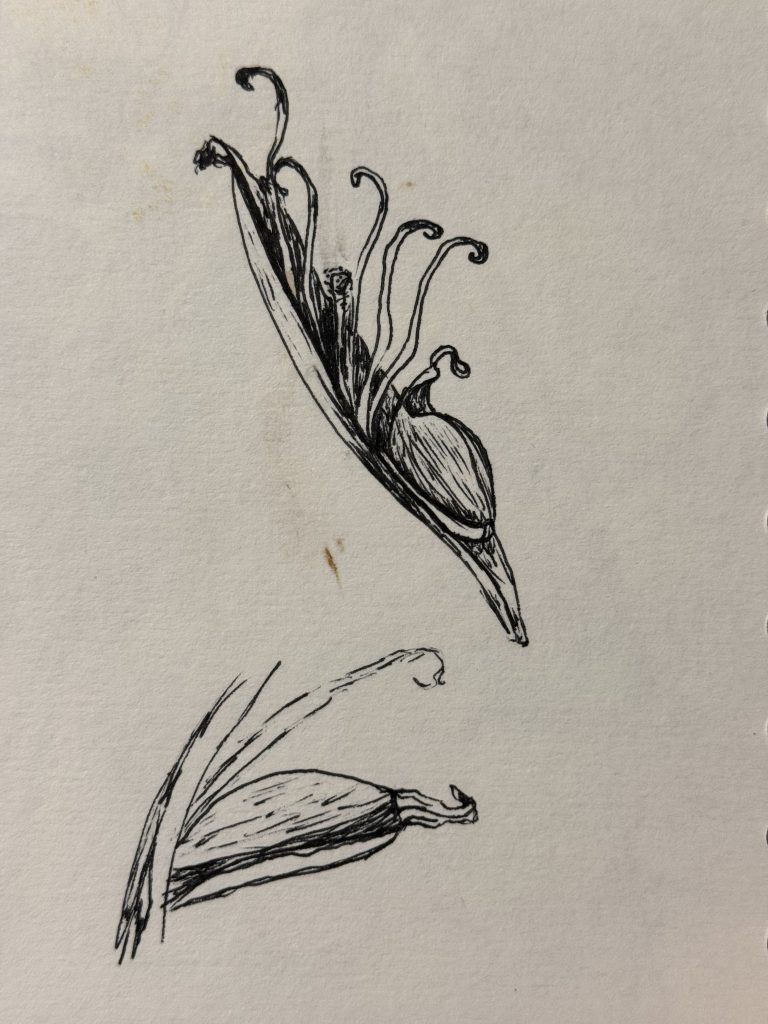
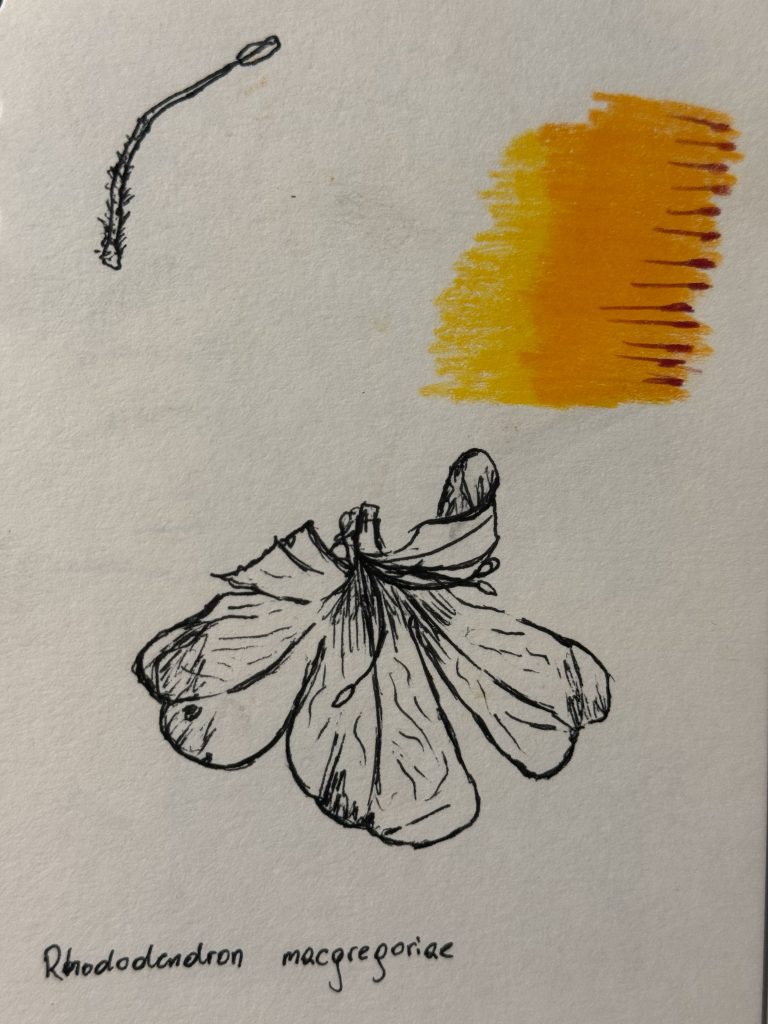
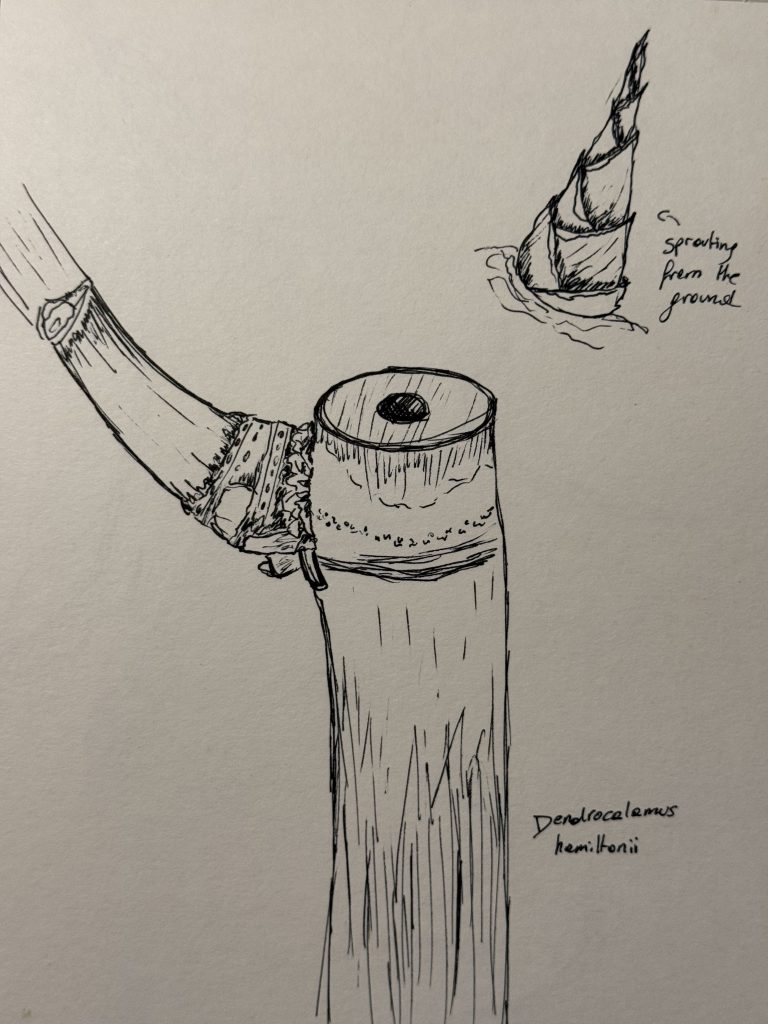
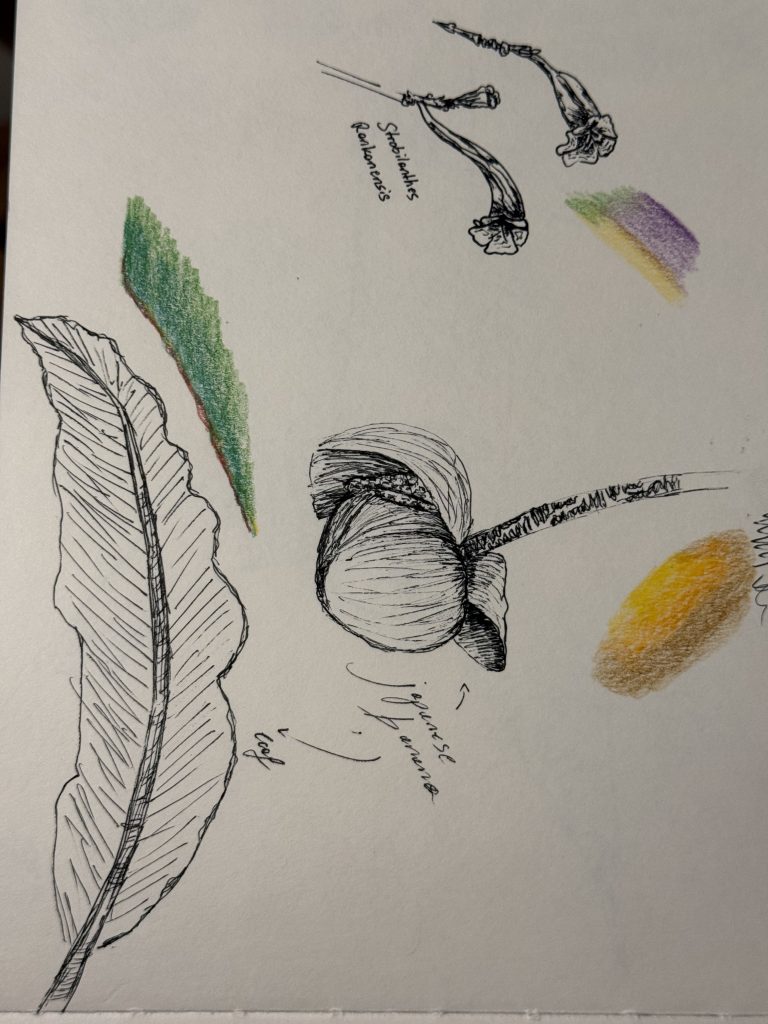
    I had identified the eight most present plants and decided to look at everything else. The plants inbetween that no one stopped for, the architecture up above that no one looked up to. I sketched detail shots of them, forcing them from absence to presence.

  • week 1

    choosing a place to investigate: Kew Gardens, a corner in the northern wing of the Temperate House.

    photography as research

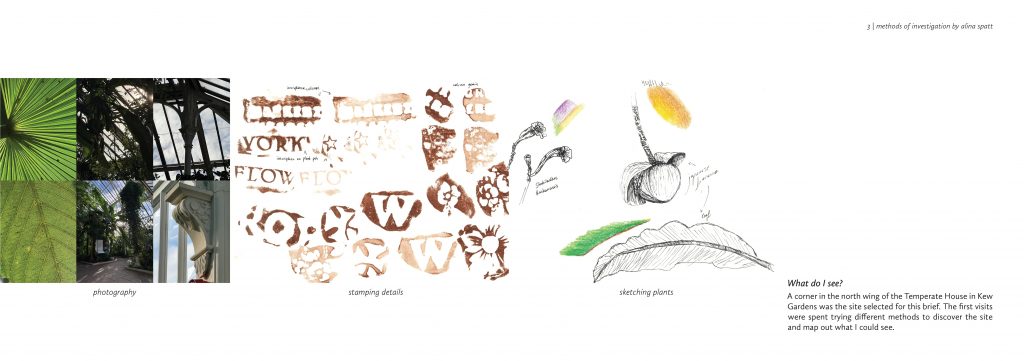
    As my first method of investigation I explored photography. I naturally gravitate towards documenting a place I’m visiting through my camera lense, so this felt like an obvious choice to start my investigation with.

    discovering patterns

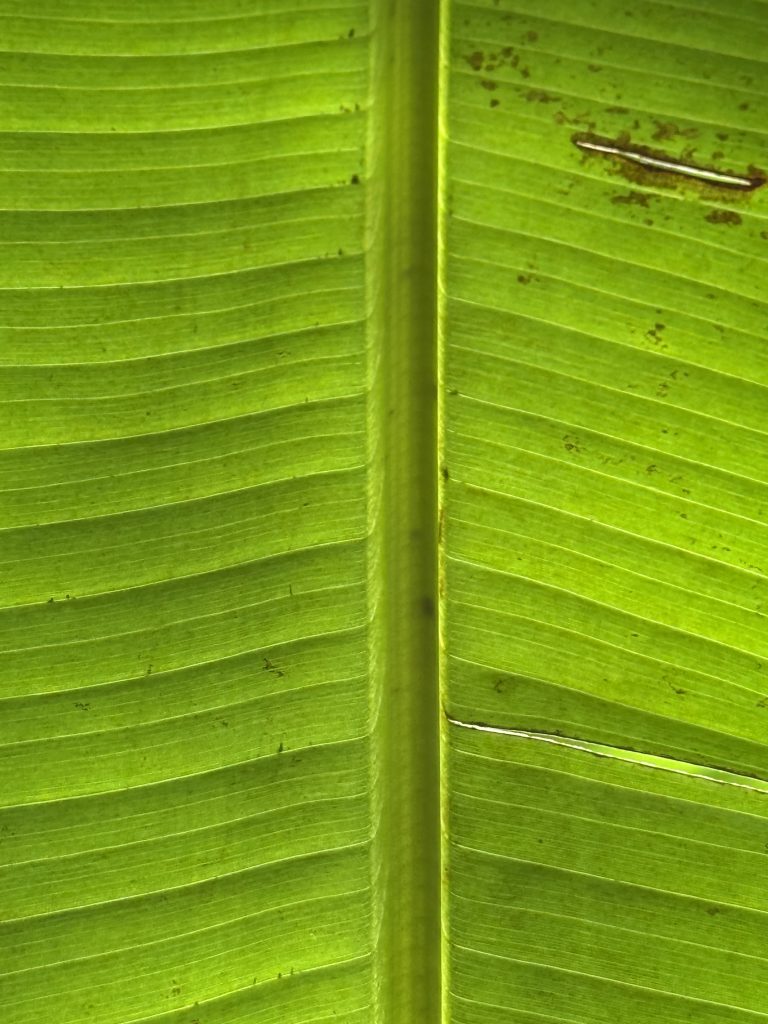
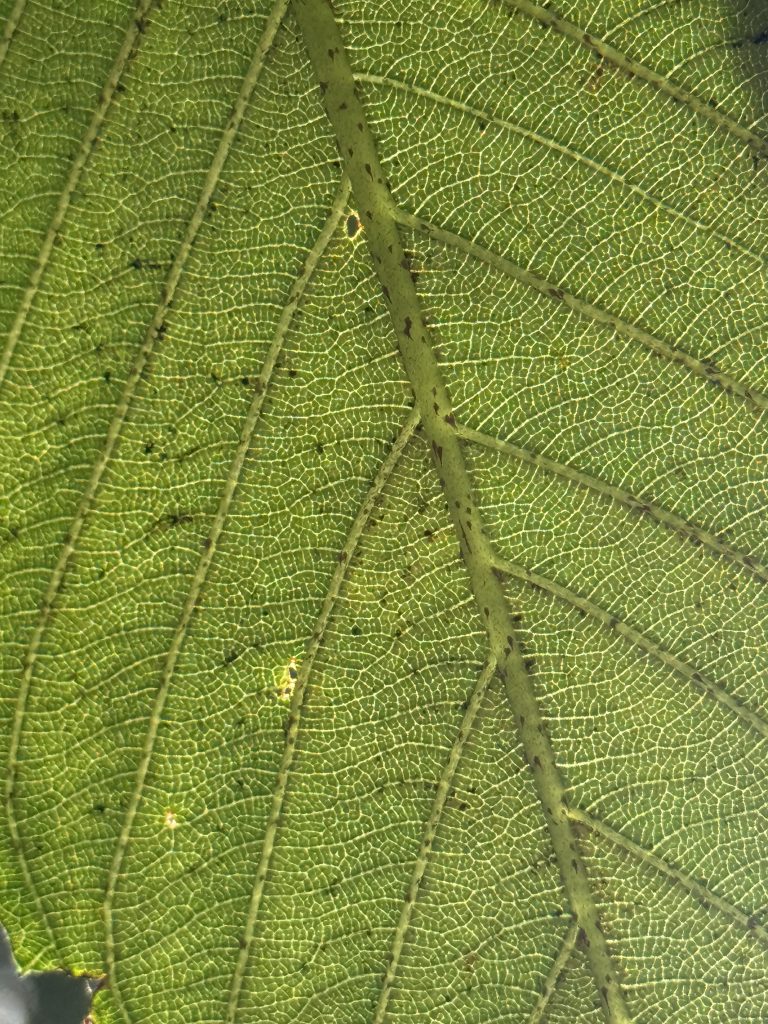
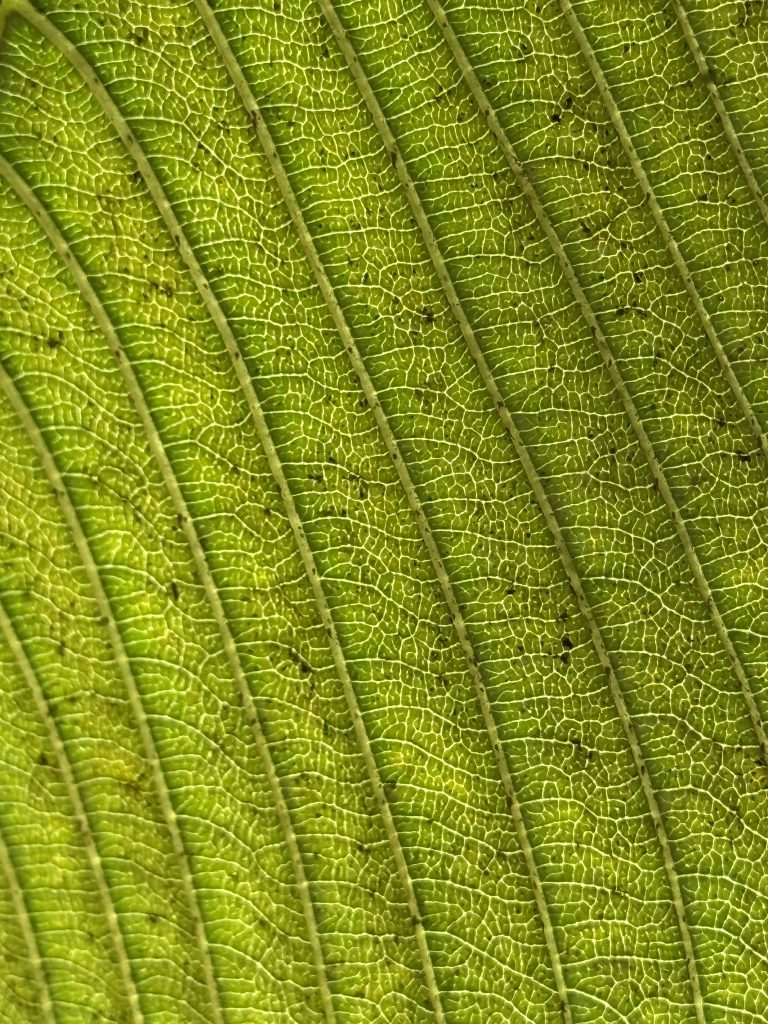
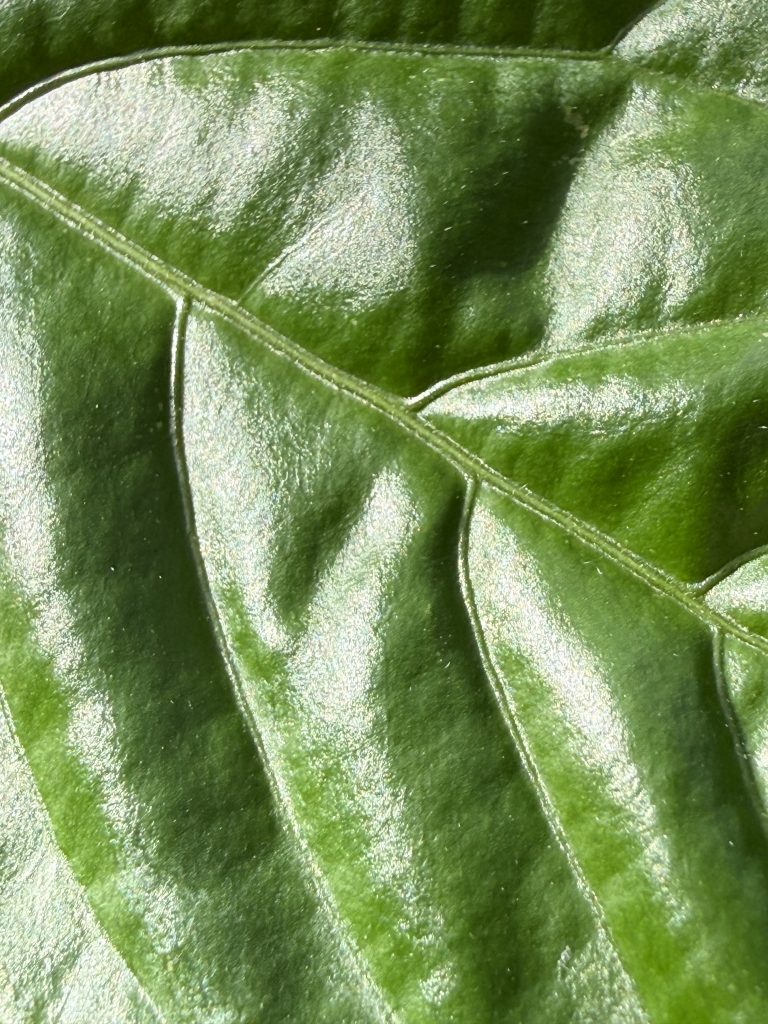
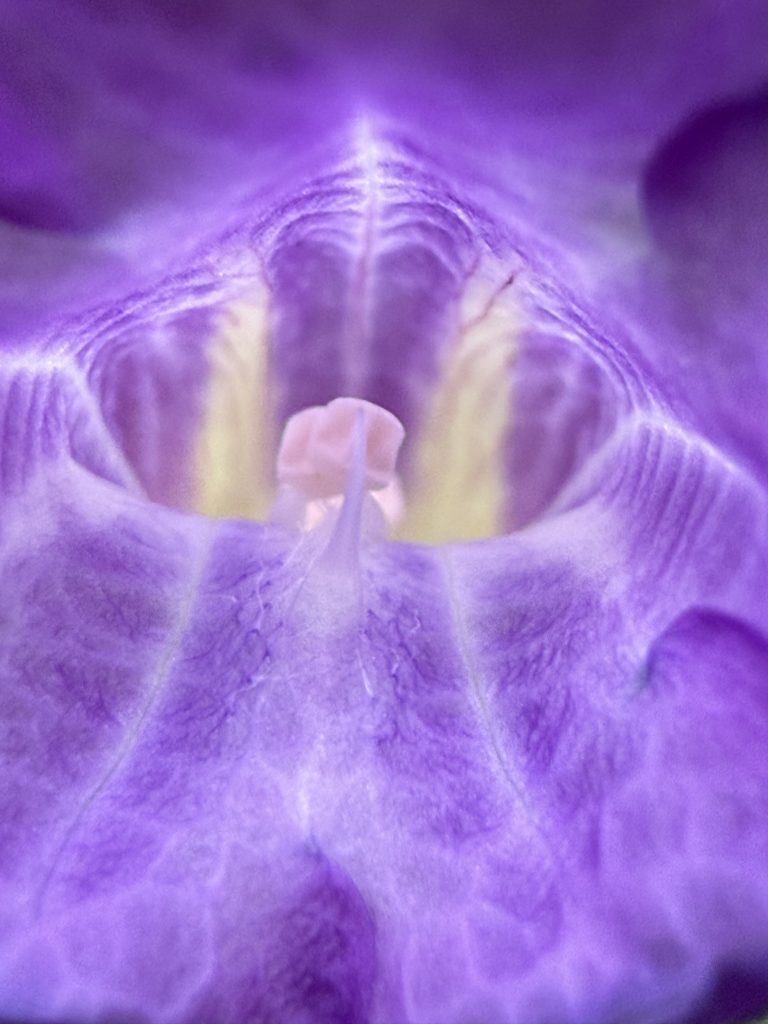
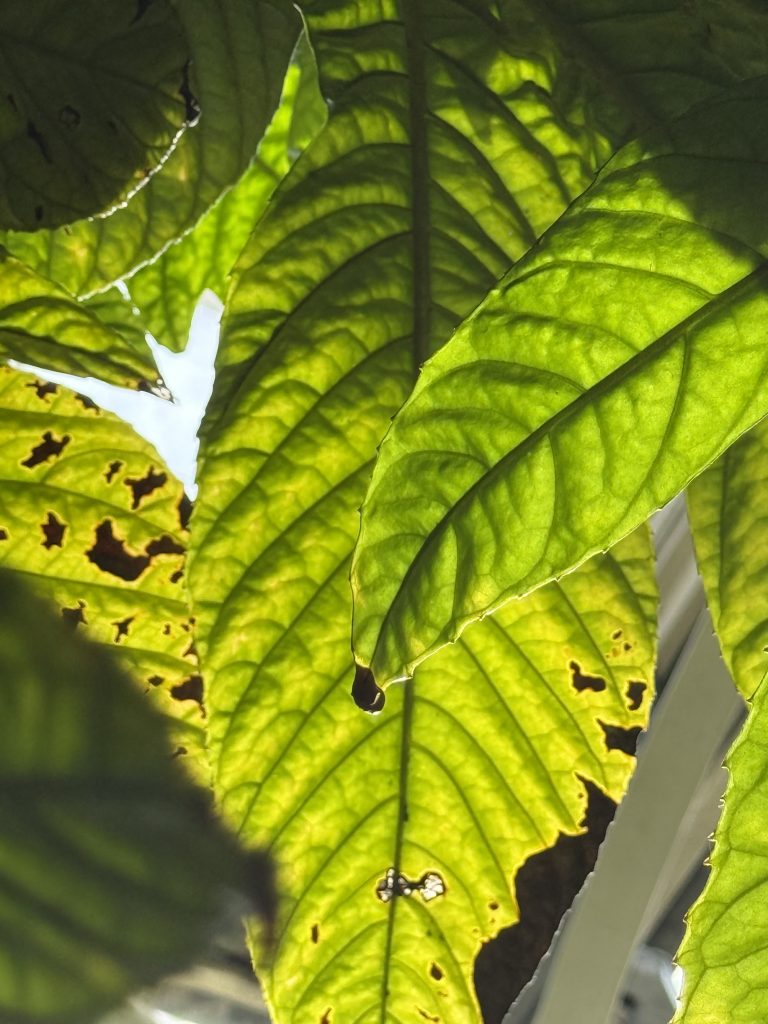
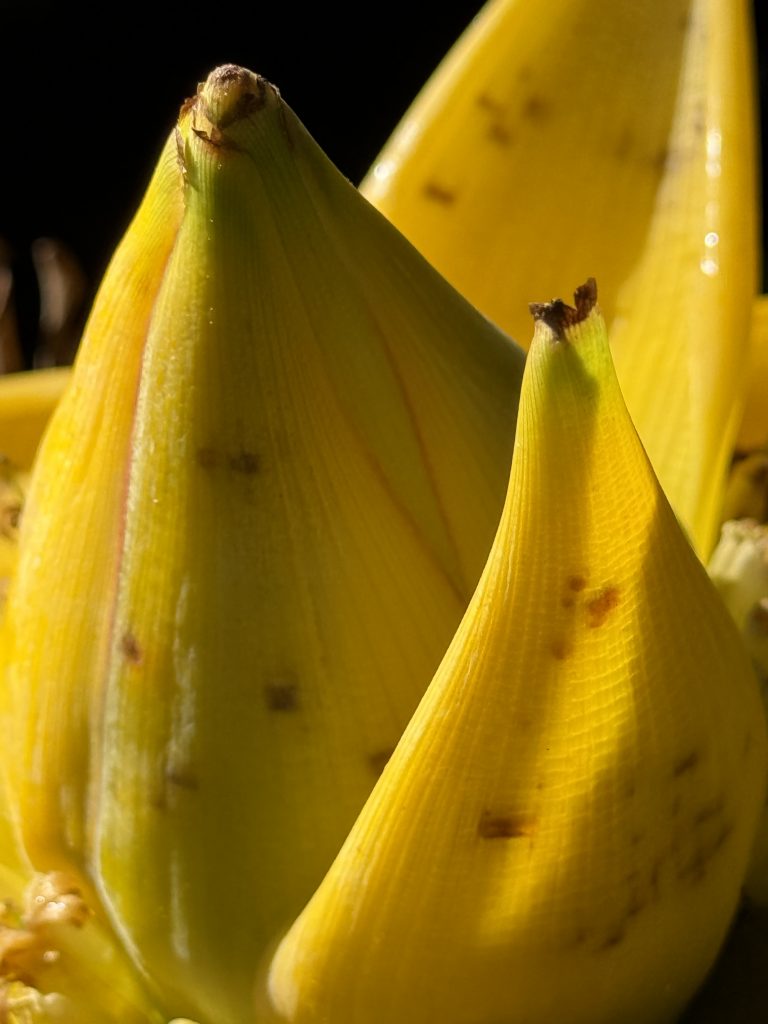
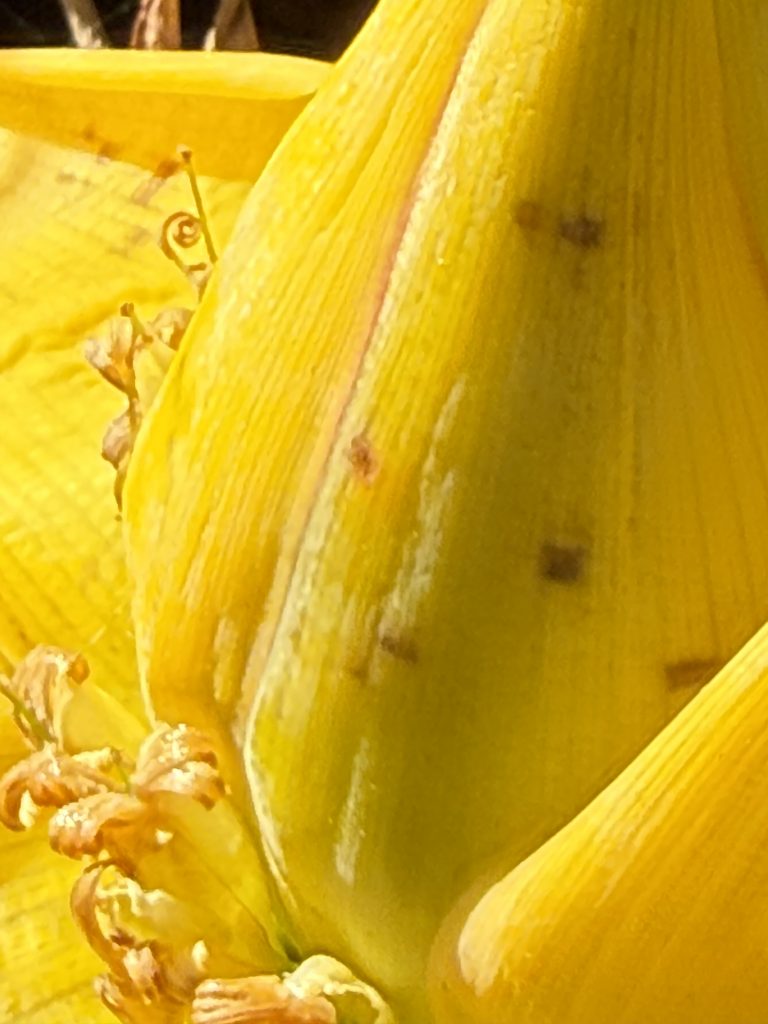
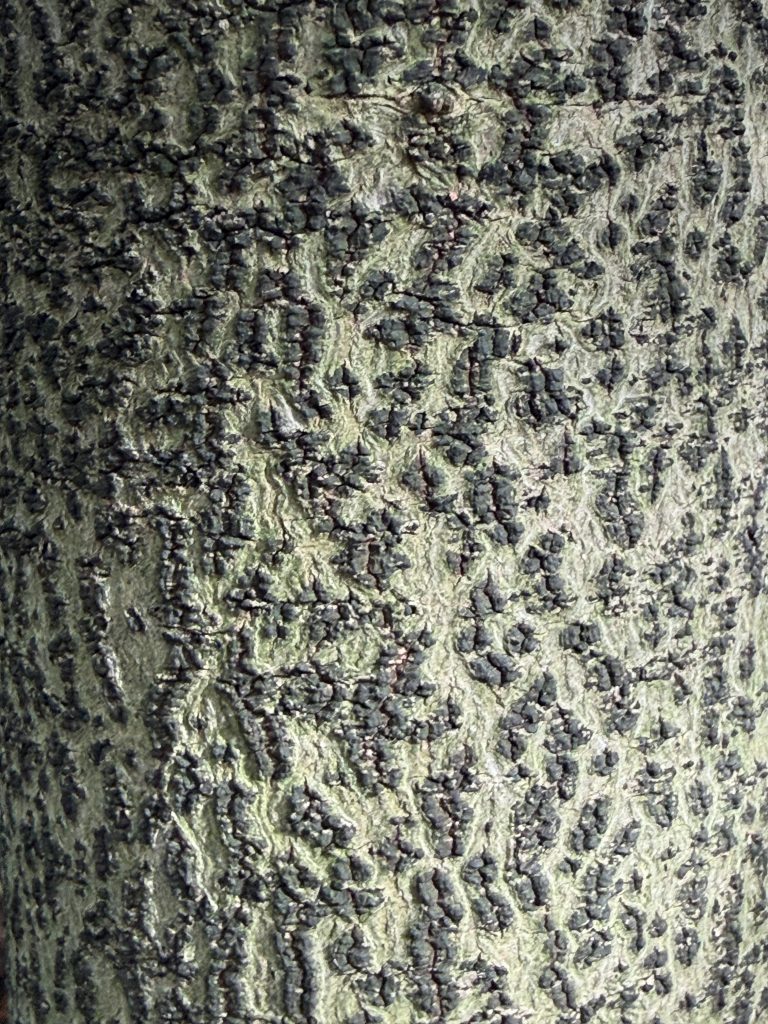
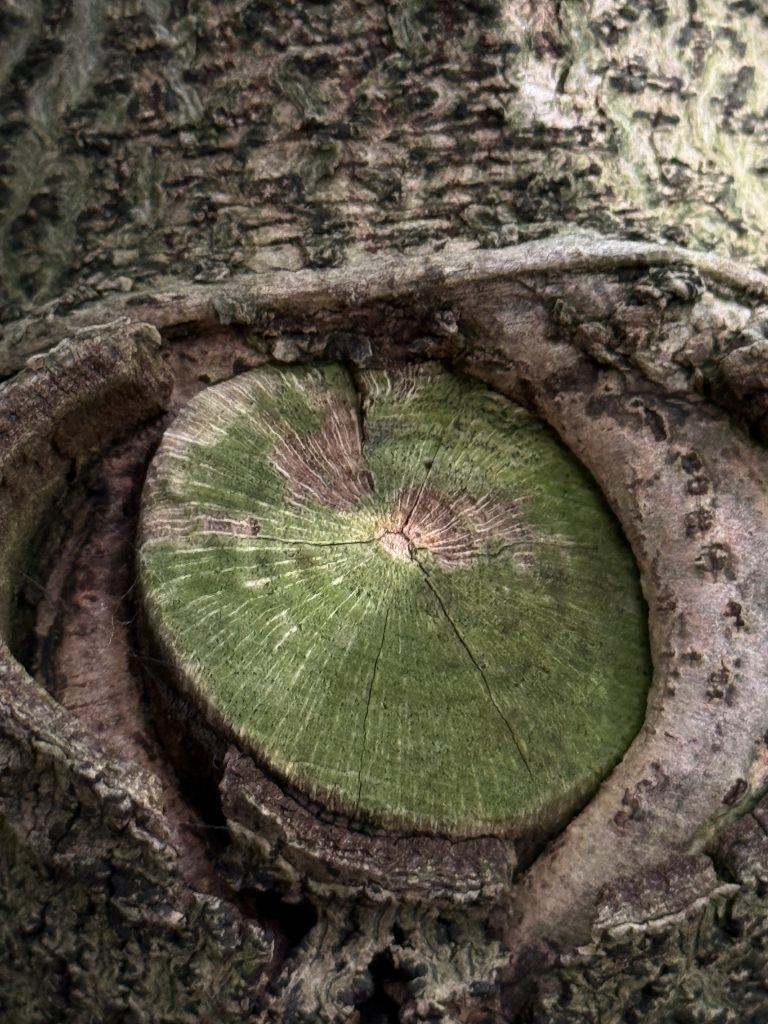
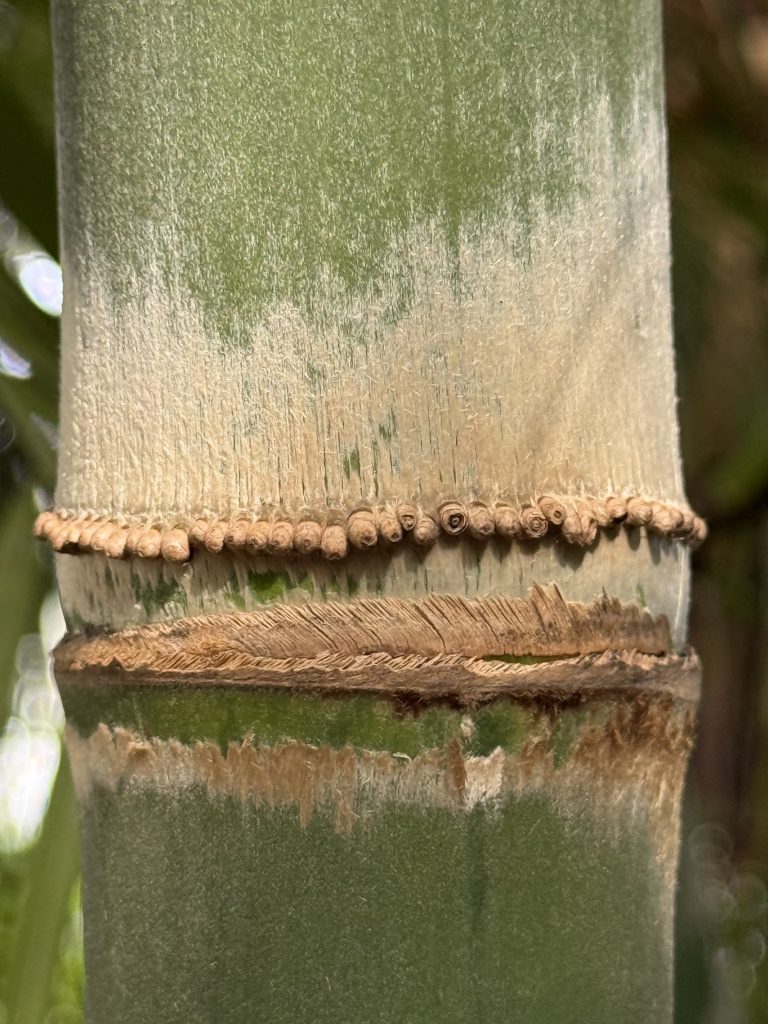
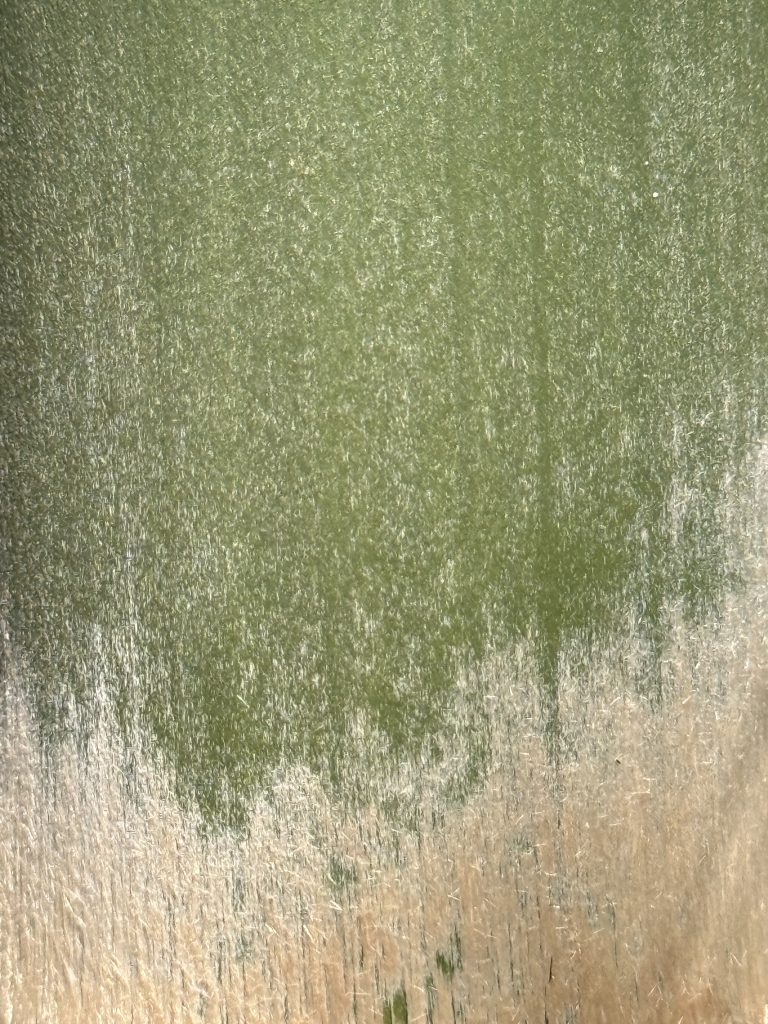
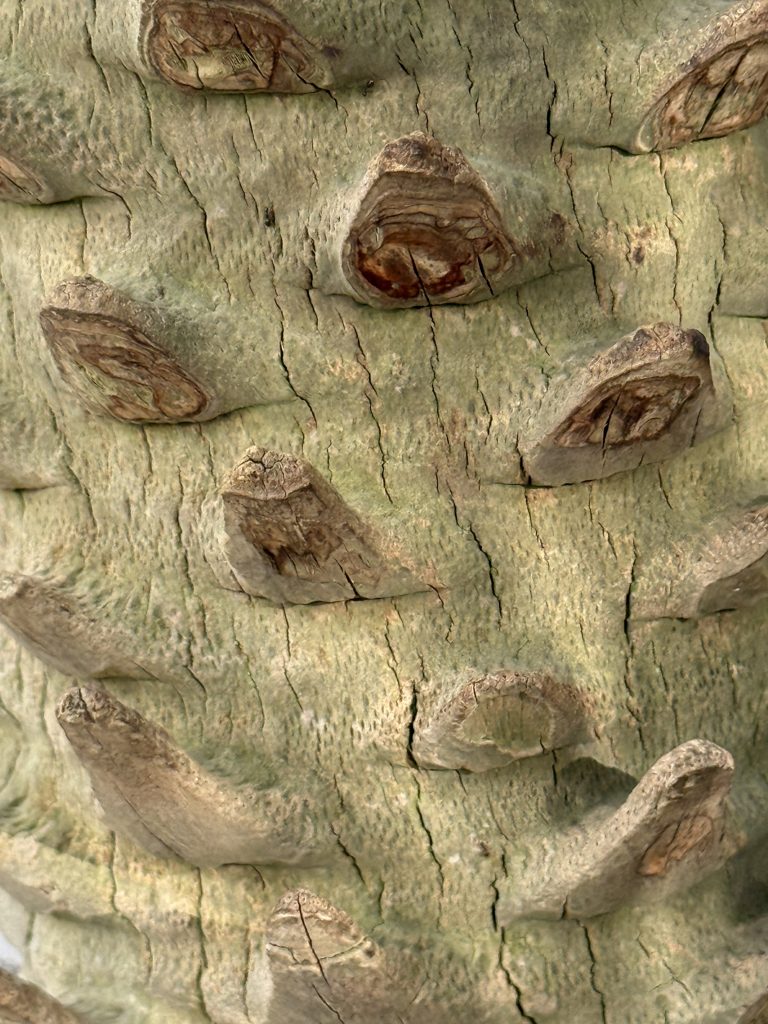
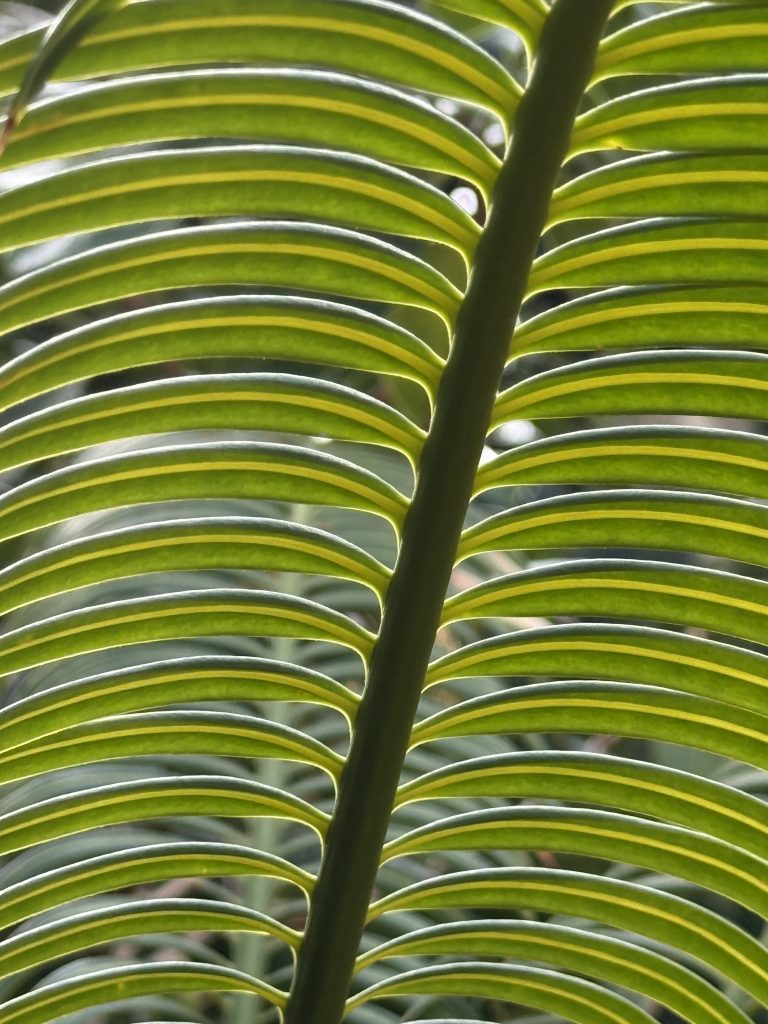
    It quickly became evident, that I was particularly interested in detail shots, mainly those, that focused on the patterns of plants. The plant itself is not recognizeable, instead, the focus is the pattern of veins and folds and textures. I was particularly intrigued by the aspect of looking closely at something that people usually only quickly glance at.

    exploring through sketching

    I wanted to continue my investigation into hidden details of the plants and selected sketching as my new method of investigating. It allowed me to look at one particular plant/object for an unusually long amount of time and discover them through making and motion. I particularly liked the aspect of concious making.

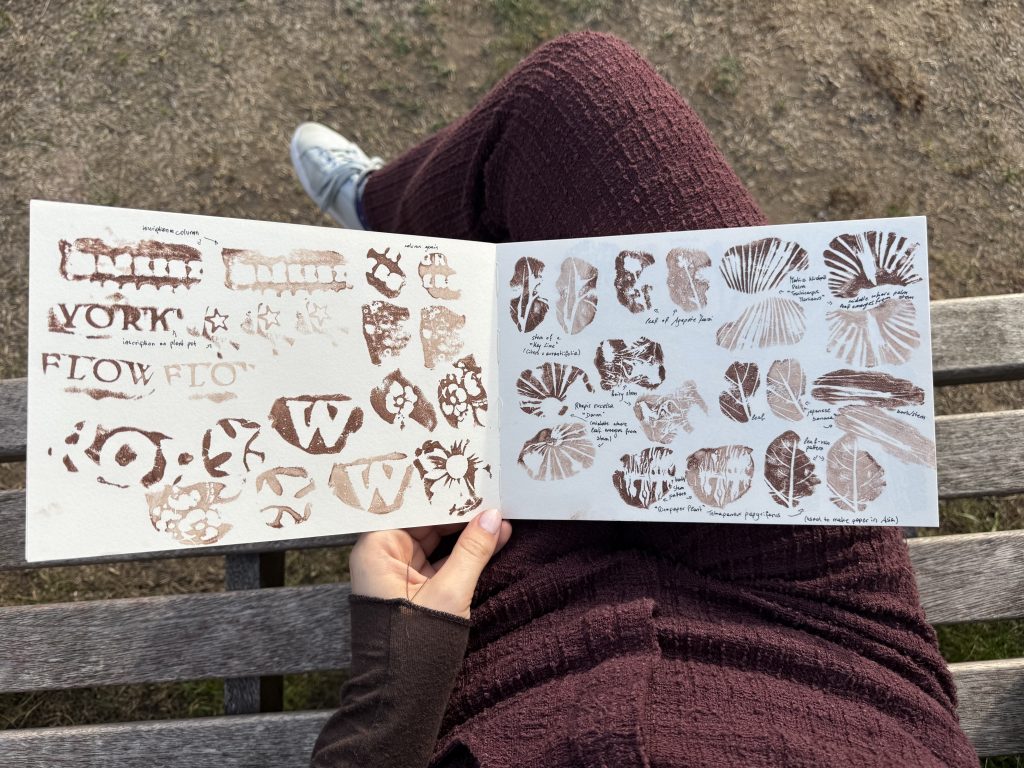
    research through pattern printing

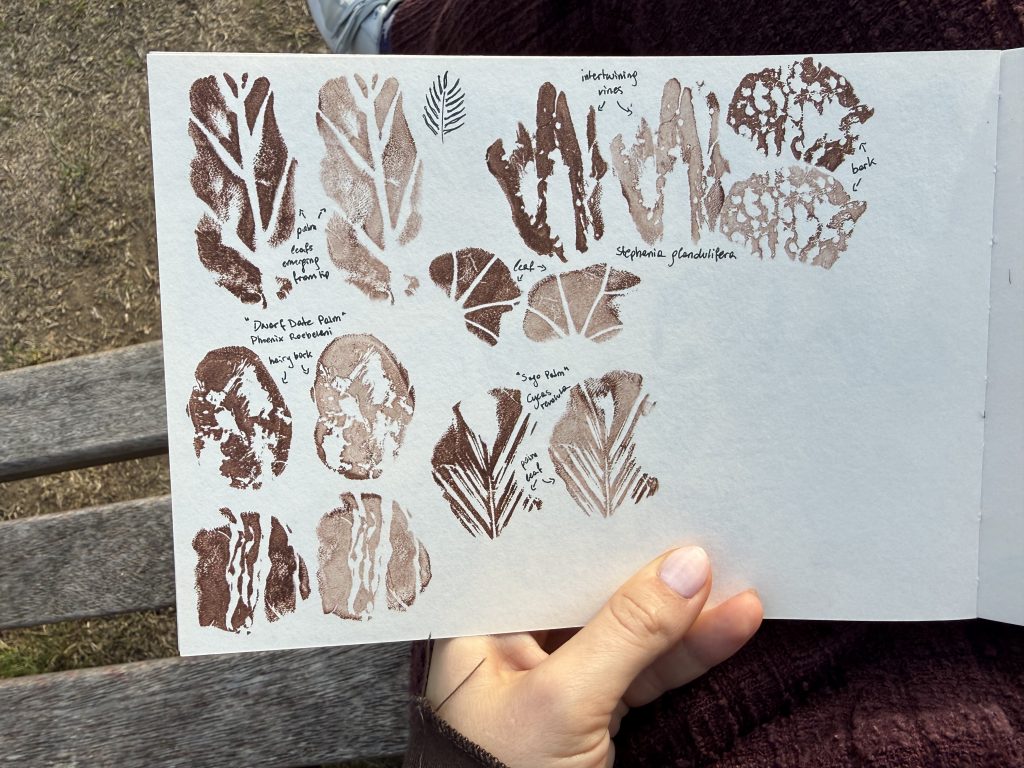
    As a last method I chose to print some of the patterns I had discovered. I used a kneadable eraser and an inkpad and printed patterns of barks, fallen leaves or pots and architecture.