In week 2 I had begun to discover the topic of absence vs. presence. I had looked for absent parts and forced them into presence by sketching them in macro detail. For week 3 I wanted to deepen my investigation into sketching absence vs. presence and how this could look like.
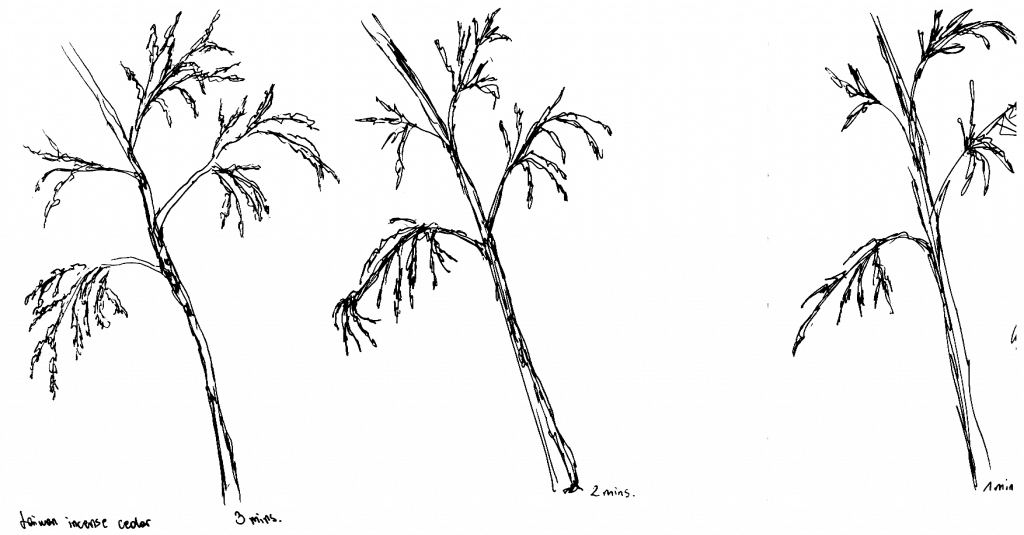
timed sketching
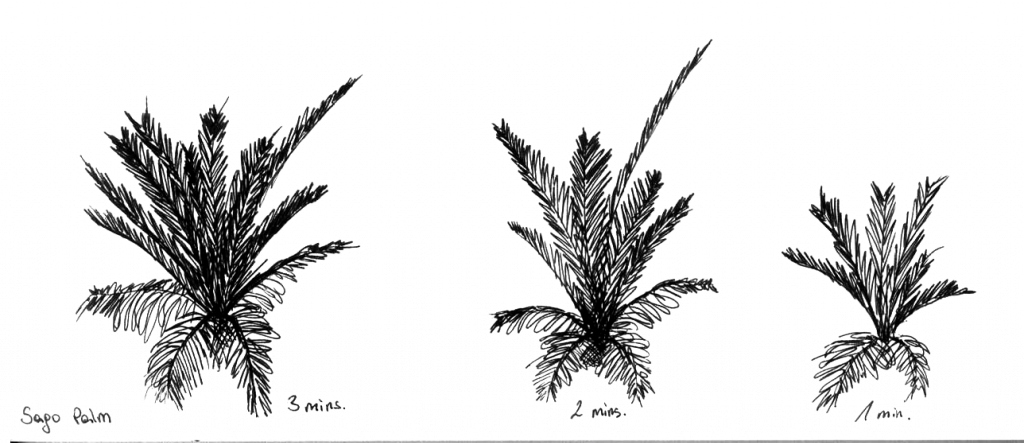
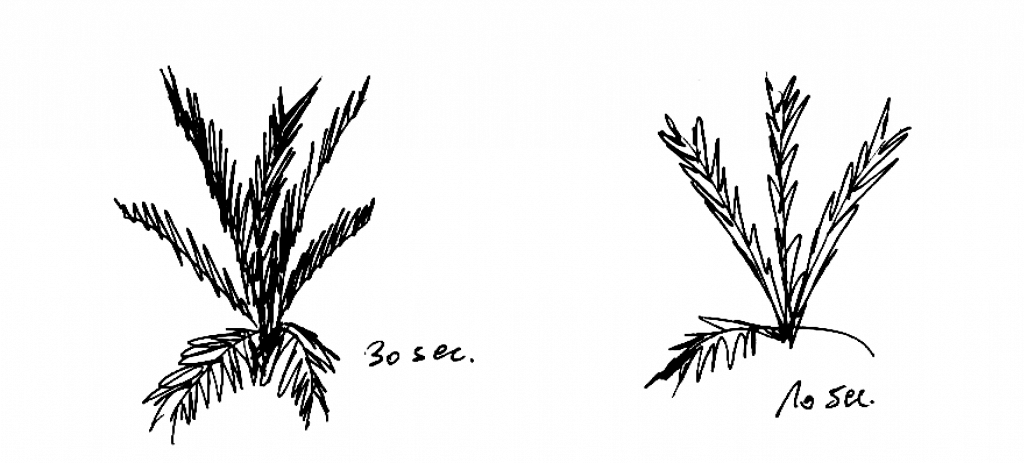
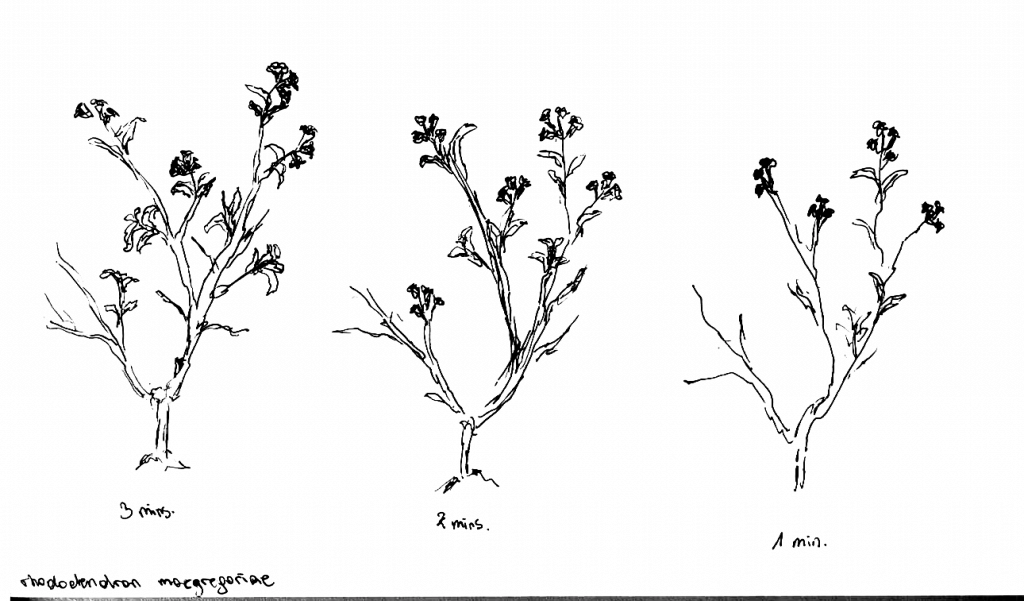
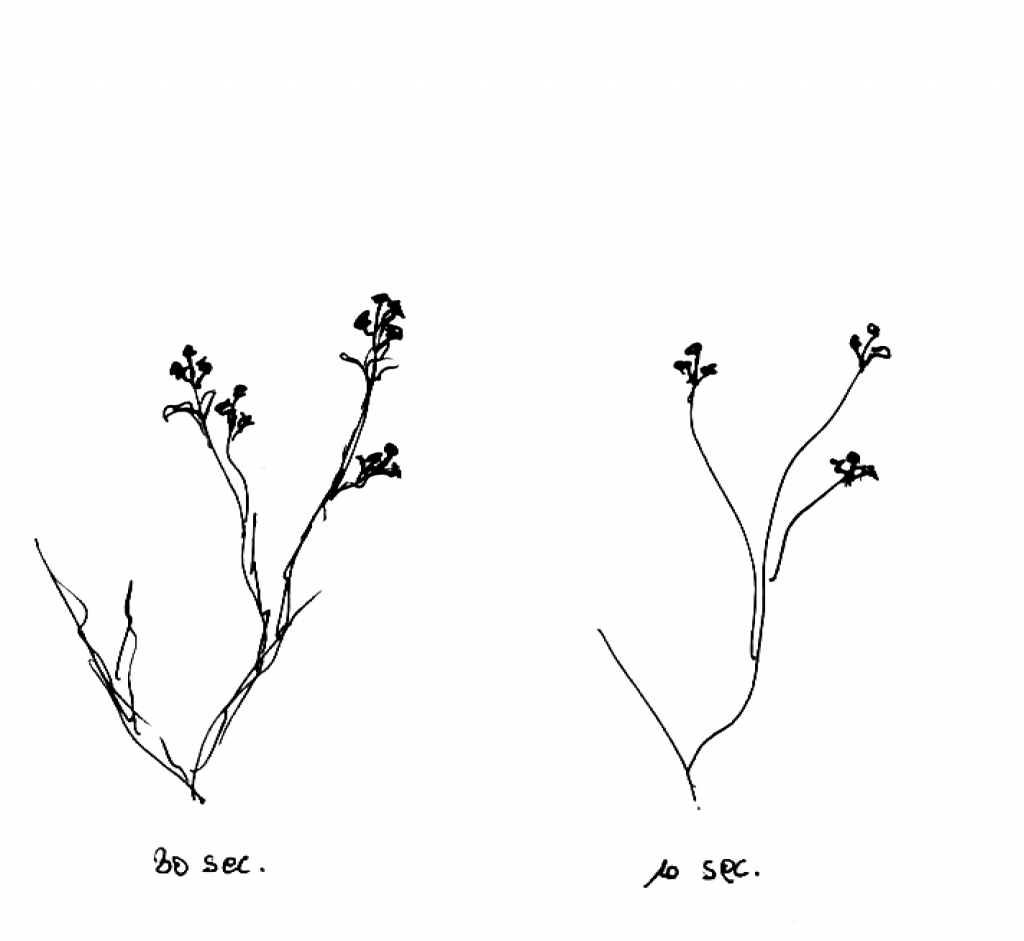
I sat back down and noted the time people took to look at plants. The longest was just about 3 minutes, but most plants received about 10-30 seconds of attention. I wondered how much presence could be recorded within these different time spans. When does presence turn into absence?


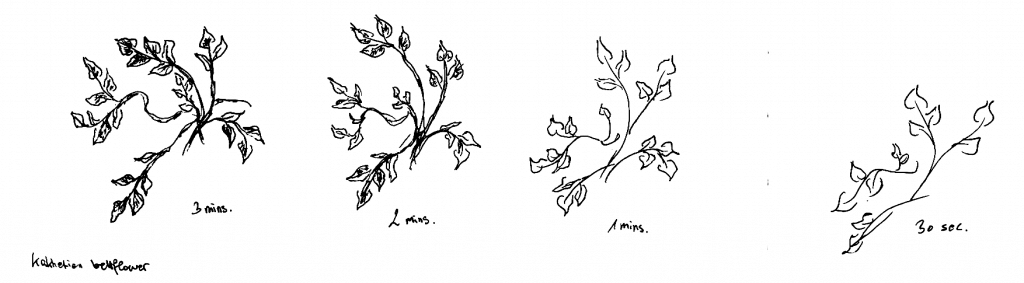
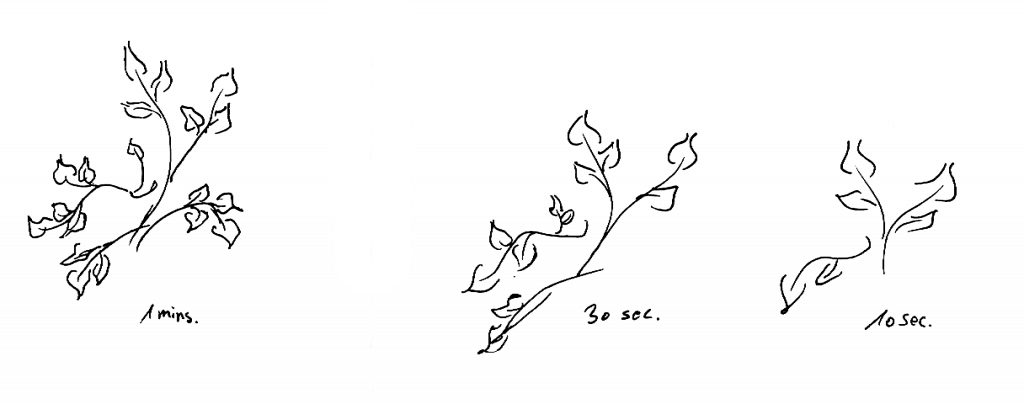
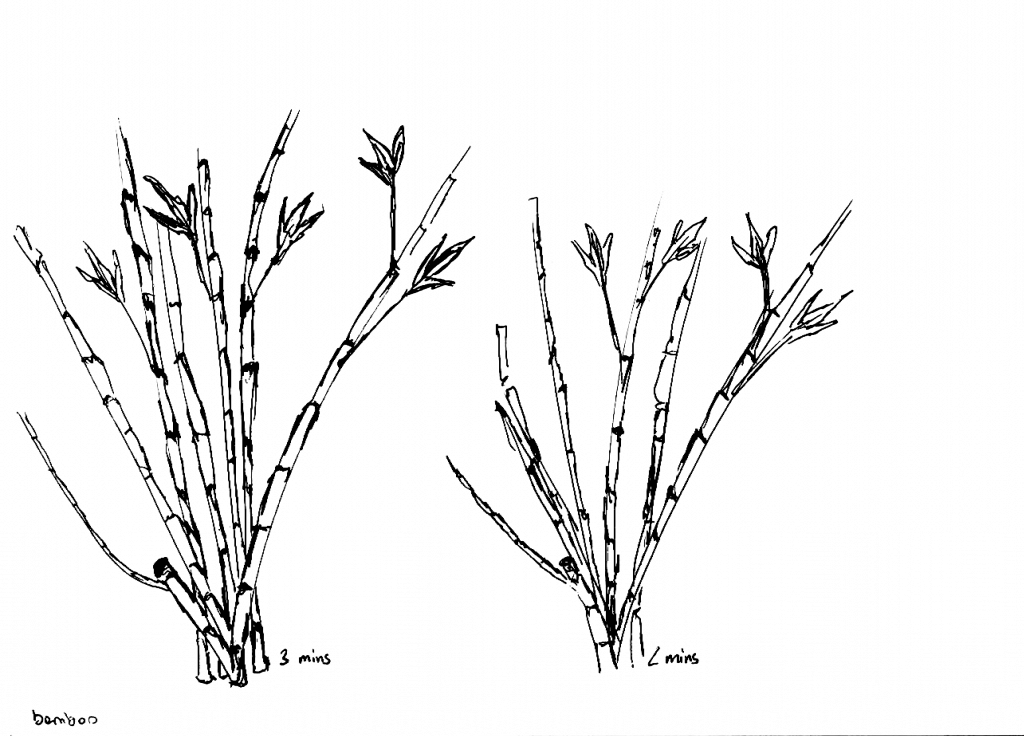
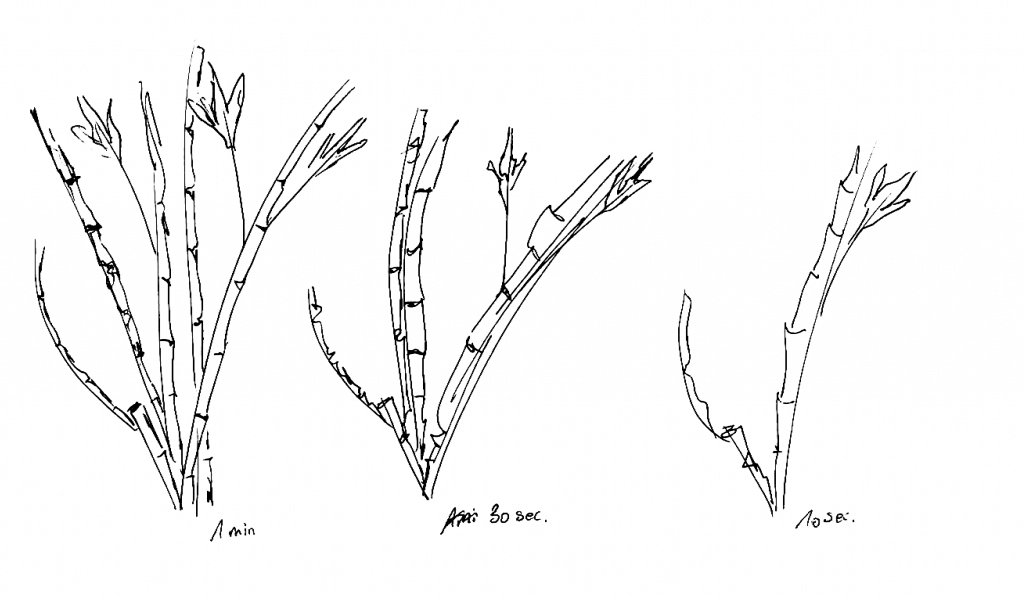
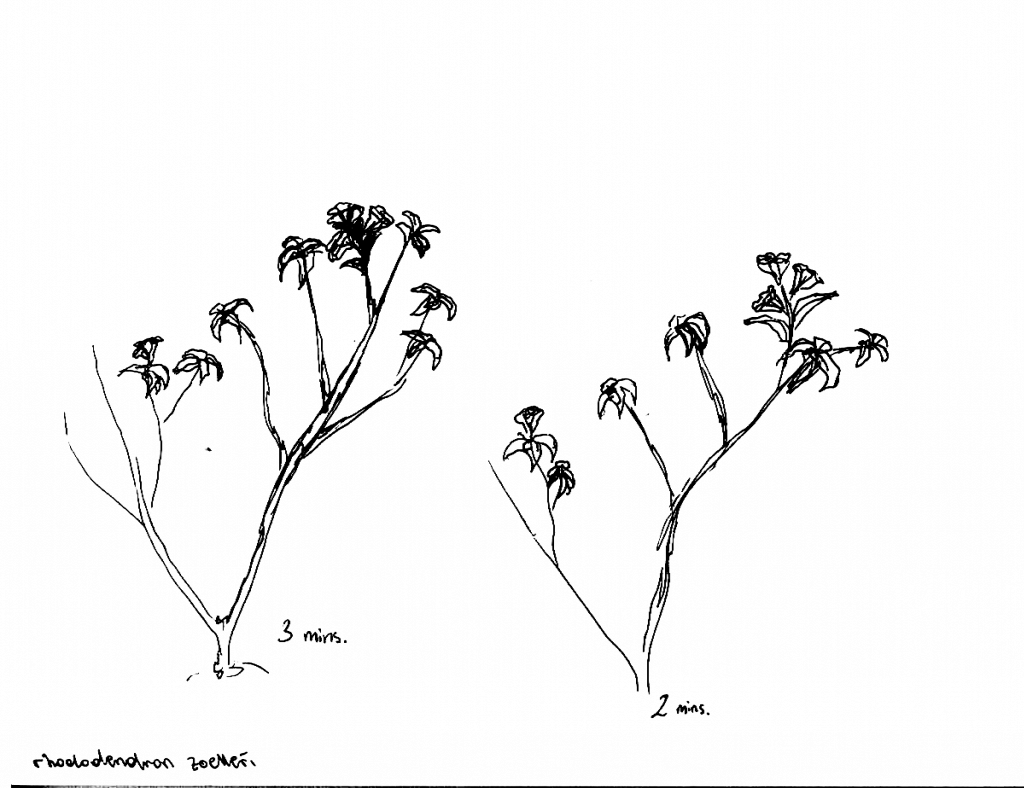
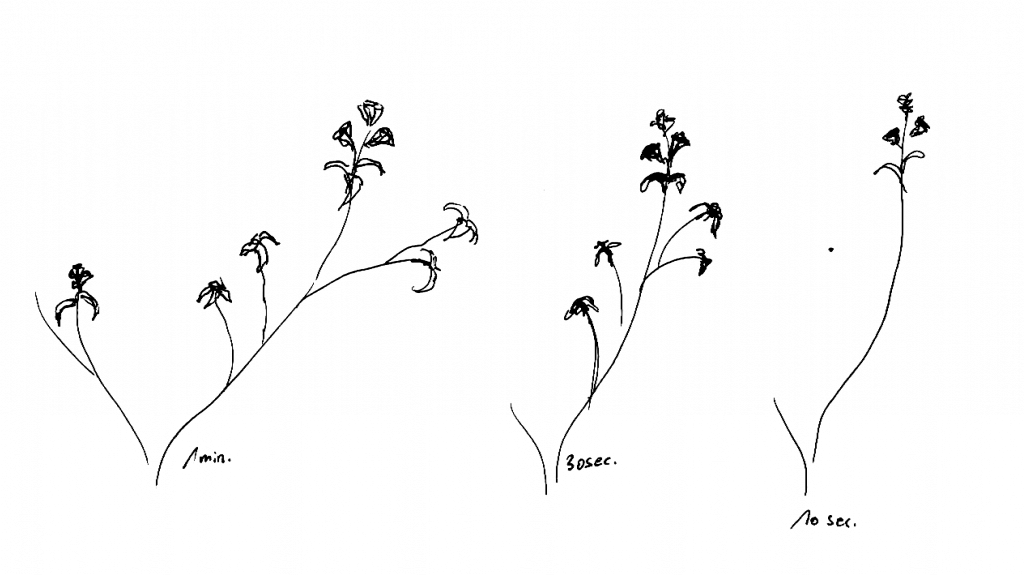
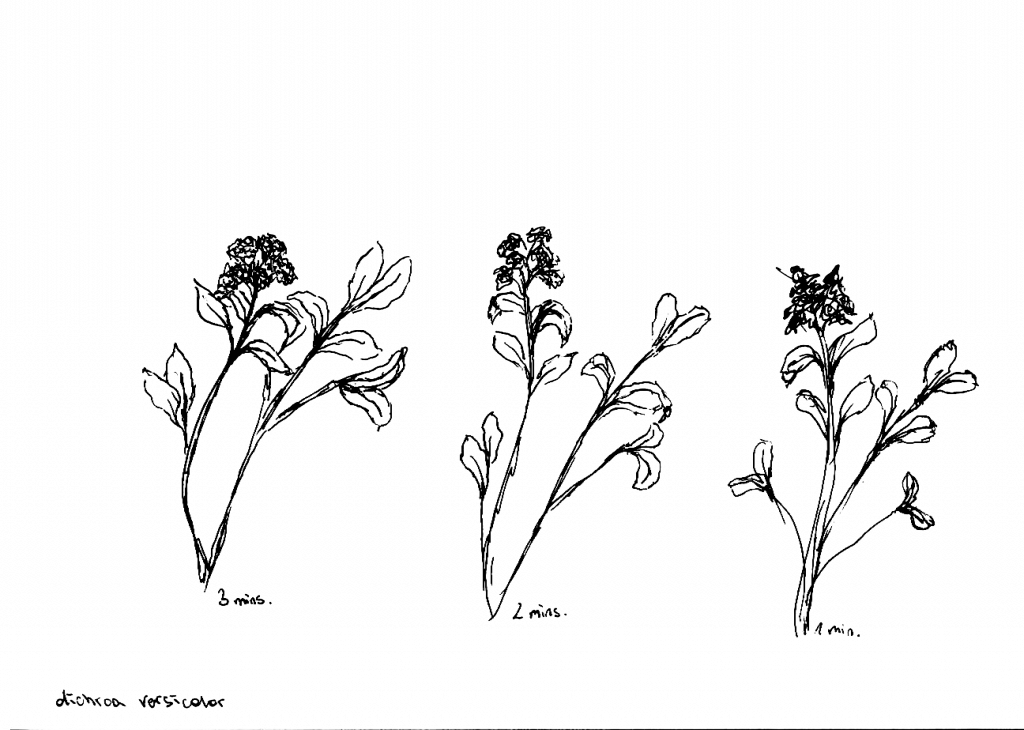
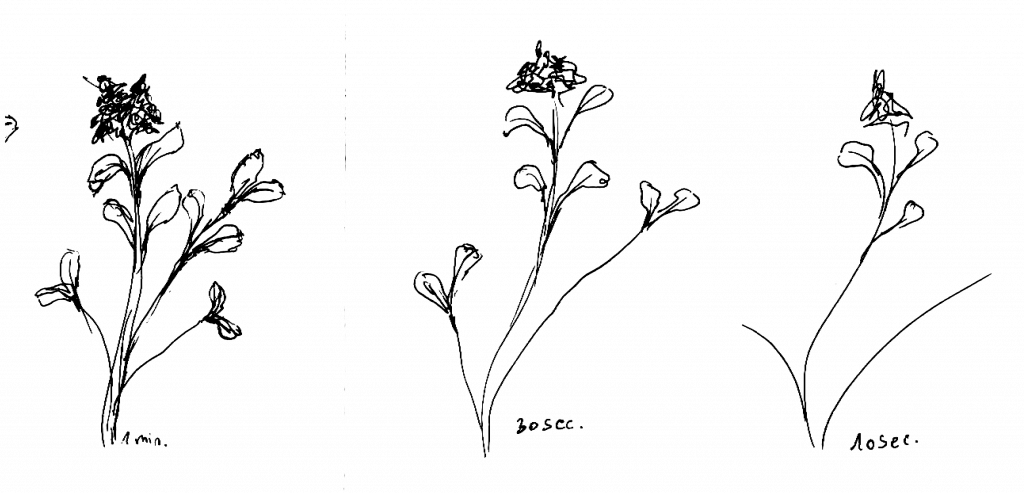

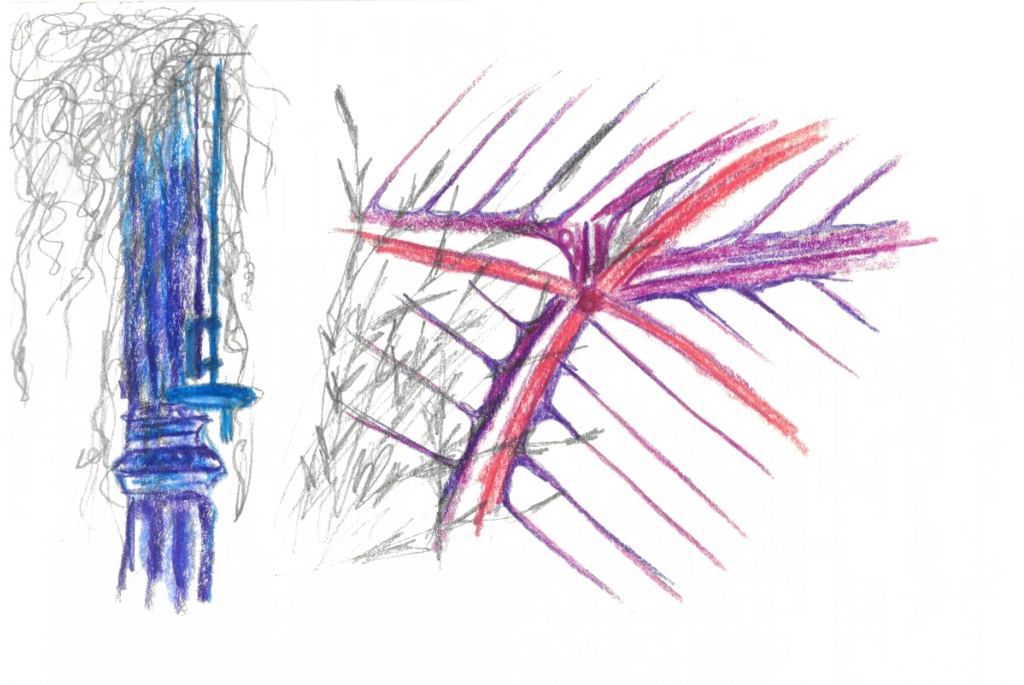
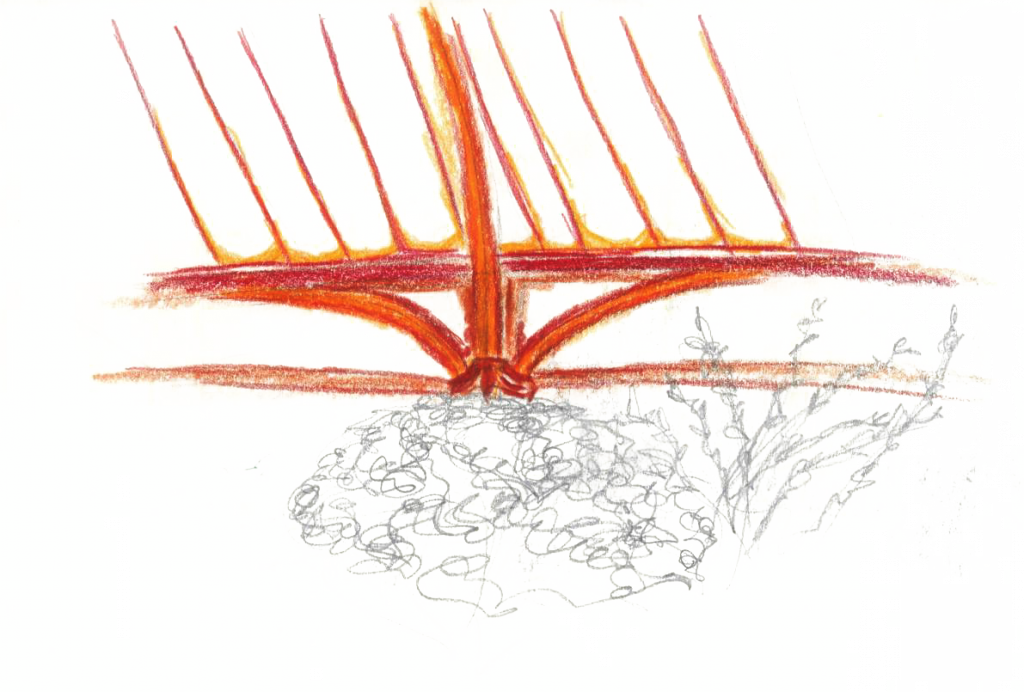
architecture designed to be absent?
When I discovered that no one looked up at the architecture, even though Kew Gardens is known for its historic victorian greenhouses, I discovered that colour contrast can be a way to make something intentionally absent. The white architecture blended perfectly into the background, the focus being drawn towards the lush greenery inside. I decided to play around with that and reverse it.

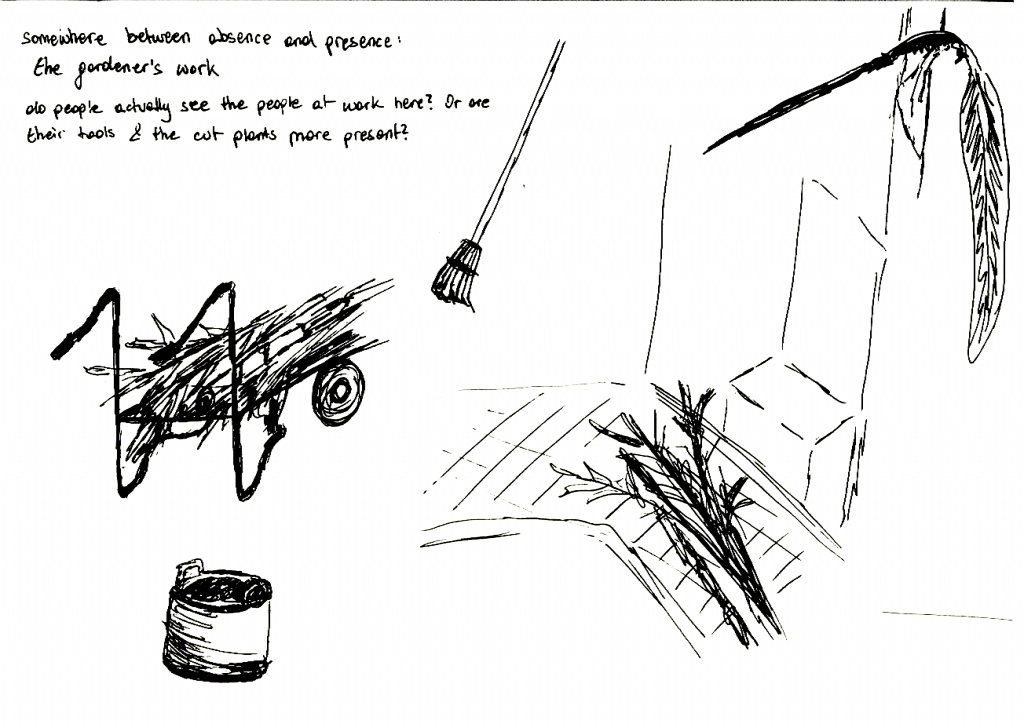
inbetween absence and presence: the gardeners
I noticed that the gardeners working in the greenhouse are usually absent from people’s perceptions. The are not spoken to, not looked at. But their tools force themselves into people’s perception, they become obstacles. The traces and cuttings spread on the floor, the wheelbarrow blocking the way, the bucket narrowing the walkway. This seemed to be an interesting space somewhere between absence and presence.
Towards the end of my investigation I realised that no matter how present or absent a plant or object within the Temperate House was, it was only ever partial. The banana plant was perceived as »big leaves« and »bananas«, the rhododendron as »bright orange blooms«. People stopped for the info signs. The rest of it blurred into part presence, part absence.

can we even record full absence?
Can a perception, however long (3 minutes or 10 seconds) ever create presence without absence? Or is the human perception a combination of both?
Asking these questions I tried to sketch what absence within presence could visually look like. Can presence and absence be visually communicated at the same time?

Leave a Reply